Province: Saskatchewan | SK

A cowboy in a black hat and sponsor vest smiles and raises one arm while standing beside a metal rodeo chute in a crowded indoor arena.

Flundra and Thomson cash in on CFR opening night

There are two local cowboys to cheer for at the Canadian Finals Rodeo in Edmonton this week, and both gave folks back home plenty to smile about on opening night.

Ridge Flundra of Twin Butte, riding at his first CFR, placed second in junior steer riding Wednesday. He earned 74.25 points aboard C-Bar’s 46 Maneater, earning $600.

The 15-year-old finished the regular season third in the Canadian standings, where only the top six earn a trip to the finals.

He holds third heading into the second round with $7,045.38, just $544 behind Gunner Armstrong of Shellbrook, Sask.

K’s Thomson of Lundbreck placed fourth in saddle bronc riding. He scored 83.75 points on Big Stone’s 734 Key Lix Second Thought, a ride worth $2,653.96.

He finished the season 10th in the Canadian standings to claim one of 12 spots at the finals, and his opening-night cheque lifts him to eighth with $37,218.63.

At 27, K’s is riding at his third CFR in saddle bronc and his fourth overall, having first qualified as a junior steer rider in 2012.

Round 2 is tonight at 6:30. Ridge has steer 969 and K’s draw is Y-38 Yesterdays Delivery. Results from every round are posted online at rodeocanada.com/cfr-2026-live-results.

The Canadian Professional Rodeo Association’s report on opening night follows.

Christmas in the Country Market flyer for Saturday, November 7, from 10 a.m. to 5 p.m. at Twin Butte Community Hall, featuring local vendors, food, and ear piercings.

Grady Young leads big movers at CFR Night 1

By Barb Poulsen
Media Relations, Canadian Professional Rodeo Association

It was opening night of the Canadian Finals Rodeo at Rogers Place in Edmonton.

Twelve men went up against what many long-time observers called the rankest pen of bulls ever assembled for a CFR.

One man rode. That man, 20-year-old Leader, Sask., talent Grady Young, entered CFR 52’s opening round less than $200 behind season leader Lonnie West.

The three-time CFR qualifier bested Legend Rodeo’s 470 Huckleberry for 87.5 points, a round win that netted the Young bank account $29,488 with $11,550.50, the amount allotted for a round win, counting in the standings. That gives the 20-year-old an $11,000 lead heading into night number two.

“I’ve seen that bull a bunch,” Young said. “He’s been to the NFR, I think a few times. I’ve seen him there, seen him at rodeos, and Legend Rodeo is actually sponsoring me, so I kind of try to keep track of their bulls a little bit. Any bull of theirs that I’ve ended up getting this year, I’ve rode and I’ve got paid. They’ve helped me get to the pay window quite a few times.”

This pay window might have yielded one of the largest payouts of the second-generation cowboy’s already highly productive career. And tonight and throughout the week, Grady Young will be trying to build on the opening night win to nail down a first Canadian bull riding title.

Event flyer for The Hometown Holiday Market on November 14, 2026, at the Heritage Inn in Pincher Creek, featuring a list of vendors and event details set against a snowy holiday background.

Meanwhile, at the other end of the arena, tie-down roper Austin Hines turned in an outstanding 7.7-second run in the tie-down roping event to edge 2022 Canadian champion Ty Harris by a tenth of a second for the big cheque. Hines, despite his immense talent, is one of the under-celebrated, unsung ropers who quietly goes about the business of fashioning an outstanding rodeo career.

“It’s always good to get here and get started for the week,” the 25-year-old Marwayne cowboy said. “We tied calves this morning and I liked that calf when we saw the draw come out. I got a good start, got my rope on her in a hurry, and it just worked out in my favour.

“I ride a horse called Gator; he’s 15 now and I’ve had him for three years. I feel like he’s upped my game a lot. I started roping a lot better once I started riding him. He fits this set-up great. I made some good runs on him last year and got things kicked off better in 2026.”

And things could get better. Wednesday’s go-round win moves him from fourth place to second in the tie-down roping standings, less than $700 behind season leader Logan Bird.

Other highlights

Bareback riding

The sweet pen of horses wasn’t so sweet to everyone, but season leader Orin Larsen added to his lead with the go-round win aboard Calgary Stampede’s six-year-old gelding H-52 Harry Money.

Steer wrestling

In a tough round of steer wrestling, Landon Beardsworth took the victory lap with a 3.5-second run. He leaps from eighth to second, although season leader Scott Guenthner placed right behind him in the round and sits $38,000 ahead of the field.

Ladies barrel racing

In the major event where everyone entered CFR 52 within a go-round win of each other, a few tipped barrels made for some interesting changes in the standings. Jennifer Neudorf leapt from 11th into second place with her lightning-fast 13.76-second run, while two-time Canadian champion Taylor Manning made enough from her fifth-place finish to take the lead for the title.

Saddle bronc

The rank pen of horses proved challenging for some, but six-time and reigning champion Zeke Thurston put some distance between himself and the field with his go-round-winning 85.50 score aboard Calgary Stampede’s nine-year-old chestnut mare C-75 Cracking the Till.

Announcement for Family Violence Prevention Month flag raising event on November 17 at 10 a.m. outside the Pincher Creek Library, hosted by the Pincher Creek Women’s Emergency Shelter Association.

Team roping

Despite the round being wide open by the time they made their run, Kavis Drake and Denim Ross still made the same run they always do, coming tight in 4.3 seconds. With some opening-night issues before finishing their run, season leaders Kash Bonnett and Logan Cullen still got a time, but now only sit $330 ahead of Drake and Ross.

Ladies breakaway roping

On a night when a lot of the ropers came up empty, two-time Canadian champion Kendal Pierson took care of business with a go-round-winning 2.2-second run. The win moves her up to fourth in the standings, but the Wardlow cowgirl would need to win two more rounds to catch season leader Bradi Whiteside.

Novice bareback

Quaide Skjonsberg set the tone for his title defence, spurring Vold’s G86 Grey Matter to an 81.50-point ride.

Novice saddle bronc

Cooper McNiven matched up well with Outlaw Buckers’ W42 Comeback Red for a 74.75-point ride, and with the sudden-death format and only three rounds in the novice events, that will go a long way toward his title aspirations.

Junior steer riding

Gunner Armstrong made a great ride on C-Bar’s feisty F01 Toxic Cooper on opening night, earning a 77.00 score. He still sits just under $3,000 behind season leader and 2025 champion Ryder Topolinski, who placed third on opening night.

The action continues tonight at Rogers Place with a 6:30 p.m. start.

Complete unofficial results are posted online at rodeocanada.com/cfr-2026-live-results.

Bareback Riding, Bull Riding, Canadian Finals Rodeo | CFR, Junior Steer Riding, Ladies Barrel Racing, Ladies Breakaway Roping, Novice Bareback Riding, Novice Saddle Bronc Riding, Saddle Bronc Riding, Steer Wrestling, Team Roping

Graphic of a keyboard with a large green button that says "online petition"

Alberta strike fuels national petition on notwithstanding clause

Teacher leaders across Canada are urging Ottawa to curb the use of the notwithstanding clause in labour disputes after Alberta became the first province to invoke the constitutional provision to end a provincewide teachers’ strike and impose a contract.

The Canadian Teachers’ Federation board of directors has launched a national petition to that end, asking the federal government to repeal or annul future provincial law that uses the clause to strip workers of the right to strike and bargain collectively.

The petition was announced June 2 alongside a joint statement signed by 21 teacher organization leaders representing more than 420,000 teachers and education workers across the country.

The leaders met June 1 in Banff to discuss what they describe as a growing pattern of constitutional overreach and released their joint statement the following day.

The petition, which calls on the federal government to affirm its responsibility to uphold Charter rights across Canada, is open until July 24 and can be found online at ctf-fce.ca.

Speaking at the event, leaders called the governmental overreach a “dangerous practice” that cannot be allowed to continue or become normalized.

“Without the balancing power that court scrutiny provides to individuals and groups of citizens, it is far too easy for governments to abuse their legislative authority and to the detriment of Canadians,” said Clint Johnston, president of the Canadian Teachers’ Federation.

The move follows the Alberta government’s use of the notwithstanding clause last October, when it invoked Section 33 of the Canadian Charter of Rights and Freedoms to pass Bill 2, the Back to School Act. This ended a legal provincewide strike by more than 51,000 Alberta teachers and imposed a four-year collective agreement.

Two men in high-visibility work shirts stand in a construction site above text that reads “Daventry Development’s share: $18,271,” followed by a summary of their business, the URL whatsyourshare.ca, and the Vision Credit Union logo.

Madison Stocker, president of Alberta Teachers’ Association Local No. 14, supports the campaign and the organizations behind it.

“I agree with what was said by the ATA and CTF and I am glad they are continuing to fight to support teachers,” Stocker says.

The strike began Oct. 6, following months of failed negotiations between the Alberta Teachers’ Association and the Teachers’ Employer Bargaining Association over wages, funding and overcrowded, complex classrooms.

The government introduced Bill 2 during a special legislative session on Oct. 27, 2025, passing it through all three readings in a single day with limited debate.

Teachers were ordered back to work by Oct. 29 and the legislation carried penalties up to $500 per day for individual teachers and $500,000 daily for the union if members participated in future job action.

By invoking the notwithstanding clause alongside the back-to-work legislation, the Alberta government took the rare step of shielding the law from Charter challenges before they could be launched, a move teacher leaders say has set a dangerous precedent.

Jason Schilling, president of the Alberta Teachers’ Association, says effects of that decision are still being felt.

“The wounds it leaves behind are real, they’re lasting, but they do not have to be inevitable,” he says. “The message sent to workers is that their rights are somehow conditional, temporary and negotiable when politically convenient.”

Schilling described watching the fallout play out in classrooms and staffrooms across the province, as teachers who had dedicated themselves to their students and communities feeling their commitment was met with disregard.

“Once that trust is broken, rebuilding will take years,” he says. “Morale suffers, relationships fracture, young people begin to question whether public service that supports our communities is worth the sacrifice. Experienced professionals begin to leave.”

The joint statement frames the Alberta situation not as an isolated incident but as part of a broader national trend.

According to the statement, the notwithstanding clause has been invoked more frequently in the past five years to deny human and democratic rights than at any other point in recent memory, including Alberta’s Bill 2 and Bill 9.

Bill 9, the Protecting Alberta’s Children Statutes Amendment Act, was introduced in November 2025 by Premier Danielle Smith and Justice Minister Mickey Amery. The legislation proposed amendments to the Health Statutes Amendment Act, the Education Amendment Act and the Fairness and Safety in Sport Act.

Besides the two Alberta bills, the statement points to two separate uses of the notwithstanding clause in Ontario in 2021 and 2022, Saskatchewan’s Bill 137 in 2023 and Quebec’s use of the clause in 2022.

“When governments invoke the notwithstanding clause to end labour disputes, they are not simply legislating,” the statement reads. “They are telling workers that their rights are conditional and that the Charter protections all Canadians depend upon can be switched off when it is politically convenient to do so.”

Johnston said the petition was prompted specifically by the events in Alberta but stressed the implications reach well beyond one province or one profession.

An older couple smiles while leaning on a wooden railing outdoors, above text describing their $879 profit share from Vision Credit Union and a website link.

“If any government is allowed to bulldoze worker rights and tip the bargaining tables in their favour in this way, it will happen again, and it could be any worker in Canada who suffers the consequences of that misuse in the future,” he said.

The federation and its provincial and territorial counterparts are calling on all levels of government to commit to good-faith collective bargaining, pledge not to invoke the notwithstanding clause in the context of labour relations and ensure courts have the opportunity to examine the constitutionality of legislation before the clause is considered.

They are also asking the federal government to take action to review and restrict provincial and territorial use of Section 33 when it is applied to deny citizens’ fundamental democratic and human rights.

The joint statement is explicit that the notwithstanding clause was designed as a safeguard to be invoked only in exceptional and demonstrably justified circumstances, not as a routine tool for governments to bypass the courts during legitimate labour disputes.

“The notwithstanding clause was intended to be used in the most extreme of cases,” Johnston said. “Unfortunately, it is becoming far too common for governments to use Section 33 simply to make legislation stick that they know would not stand up to judicial scrutiny, and that is unacceptable.”

Schilling echoes that warning, saying the consequences of silence on the issue are too great to ignore.

“Rights that can be suspended when they become inconvenient are not rights at all,” he said. “Silence makes this move by governments easier. Our solidarity today makes it harder.”

The presidents of all provincial and territorial teachers’ organizations encourage Canadians who share their concerns to sign the petition before it closes on July 24.

Back To School Act, Charter Rights, Collective Bargaining, Labour Disputes, National Petitions, Notwithstanding Clause, Section 33, Teacher Strike

Logo with the word "Alberta" in stylized script above a blue banner that says "Government News and Notices" in white uppercase letters.

Privacy regulators discuss AI, cybersecurity at Banff meeting

Federal, provincial and territorial information and privacy commissioners concluded their annual meeting in Banff on Oct. 10, focusing on emerging issues related to artificial intelligence, cybersecurity and health data protection.

The two-day meeting, hosted by the Information and Privacy Commissioner of Alberta, brought together regulators and ombuds with responsibilities under access and privacy laws, according to a government news release.

AI and online harms

Emily Laidlaw, a Canada Research Chair in cybersecurity law and associate professor at the University of Calgary Faculty of Law, presented on online harms and the information ecosystem, covering AI, protection of children, misinformation and disinformation, freedom of expression and human-centric cybersecurity.

Health data storage

Michael Geist, Canada Research Chair in Internet and E-Commerce Law at the University of Ottawa, addressed the use of servers outside Canada to store health data of Canadians. He discussed whether data localization should be regulated under privacy or other laws in Canada.

Cybersecurity threats

Daniel Couillard and Richard Larose, both with the Canadian Centre for Cyber Security, provided an overview of their agency’s roles and mandate. They shared insights from the National Cyber Threat Assessment 2025-2026 and discussed opportunities for mutual support as privacy regulators continue dealing with massive data breaches caused by cybersecurity attacks.

AI in healthcare and tribunals

Paul Daly, chair in administrative law and governance at the University of Ottawa, discussed the use of AI by administrative tribunals, describing potential advantages and disadvantages.

Ross Mitchell, a professor in the Department of Medicine and adjunct professor in computer science at the University of Alberta and a fellow at the Alberta Machine Intelligence Institute, provided an overview of deep learning applications to healthcare. He addressed the use of AI scribes to record and transcribe physician conversations with patients and how to consider privacy rights in this context.

Legislative updates

Meeting participants discussed recent developments and expected changes to access and privacy laws across Canada, as well as key court decisions with implications for access and privacy.

“Our offices work collaboratively year-round on issues relating to privacy and access to information,” says Diane McLeod, Information and Privacy Commissioner of Alberta. “Our annual meeting offers the opportunity to spend time together in person to discuss emerging issues, share insights and experiences, and strengthen our joint commitment to protecting the access and privacy rights of all Canadians.”

McLeod says the work addresses critical issues facing individuals, communities, governments, organizations, businesses and society at large, many relating to challenges of digital technology.

“Most of us live much of our lives online, and while this brings benefits, it also presents privacy risks,” she says.


Alberta | AB, Artificial Intelligence | AI, Cybersecurity, Information and Privacy

A cowboy wearing a hat and a numbered shirt rides a white horse in a rodeo arena, preparing to throw a lasso. An official in a white shirt and hat stands nearby.

Tie-down ropers neck-and-neck heading into CFR finale

The Canadian Finals Rodeo heads into its final two rounds Saturday with the tie-down roping championship up for grabs.

Kyle Lucas of Carstairs and Beau Cooper of Stettler turned in identical 7.6-second runs — the fastest of the week — and both remain in contention. Stran Dunham of Souris, Man., leads with $54,137, holding a $7,000 edge over Cooper in second place at $47,501. Lucas sits third, just $2,000 back of Cooper.

“All three rounds have been good rounds with really good roping,” Cooper says. “It’s all been pretty tight and everybody’s roping good.”

Lucas credits his horse and preparation. “I think the hardest thing is to let go and trust your preparation and your training,” he says. “I’m riding Bunny (Lola) here at the CFR. Tim Bagnell let me take that horse and that’s kind of his baby. I’m just very fortunate to get to take her.”


A cowboy wearing a white shirt and hat rides a rearing gray horse in a rodeo arena, holding a lasso, with dirt flying and spectators in the blurred background.

Kyle Lucas – Photo by Billie Jean Duff

In bull riding, two-time champion Jared Parsonage has seized control with a perfect three-for-three performance. The Maple Creek cowboy is the only bull rider to conquer all three bulls so far and leads with $56,420 over season leader Jake Gardiner’s $52,820. Parsonage captured second place Friday with an 87.5-point ride on Trailer Trash. He also leads the aggregate with 256.75 points on three.

Get Stuff’d meat and seafood shop sign, located at 214 13th St. in Fort Macleod, open Thursday through Saturday from 12 noon to 6 p.m., phone 368-996-1968, follow us on Facebook at Get Stuff’d.

Round 3 winners:

  • Bareback: Dantan Bertsch, 86.75 points
  • Steer wrestling: Scott Guenthner, 3.6 seconds (third consecutive round win)
A rodeo competitor wearing a pink shirt and hat rides a horse while swinging a lasso toward a running calf in an indoor arena, with spectators and signage visible in the background.

Caitlyn Dahm – Photo by Covy Moore

  • Breakaway roping: Caitlyn Dahm, 1.9 seconds
A rodeo cowboy wearing a hat and maroon shirt rides a bucking horse in an indoor arena, surrounded by spectators and judges. The horse is mid-jump, with its legs raised and mane flying.

Ben Andersen – Photo by Covy Moore

  • Saddle bronc: Ben Andersen, 88 points
  • Barrel racing: Pamela Morrison, 13.84 seconds (first CFR round win)

A rodeo competitor rides a galloping horse in an arena, wearing a white shirt and black cowboy hat. The horse has blue protective leg wraps. Rodeo staff and spectators watch in the background.

Kash Bonnett – Covy Moore Photo

A rodeo cowboy wearing a black hat rides a galloping horse, swinging a lasso in an indoor arena. Spectators and event staff watch in the background. The image is credited to Covy Moore.

Logan Cullen – Photo by Covy Moore

  • Team roping: Kash Bonnett/Logan Cullen, 4.5 seconds (second consecutive round win)
  • Bull riding: Grady Young, 88.25 points
A rodeo cowboy in a red shirt and black hat rides a bucking horse in an arena, gripping the reins as the horse leaps. Spectators and officials watch from behind a metal fence.

Quaide Skjonsberg – Photo by Covy Moore

  • Novice bareback champion: Quaide Skjonsberg

Ace of spades card on ad for Chase the Ace at the Pincher Creek Legion

A rodeo rider wearing a helmet and vest rides a bucking horse inside an arena as the horse kicks up its hind legs; rodeo officials and onlookers stand behind the fence in the background.

Clay Greenslade – Photo by Covy Moore

  • Novice saddle bronc champion: Clay Greenslade

CFR 51 rounds four and five start at 11 a.m. and 6:30 p.m. Saturday at Rogers Place in Edmonton. Complete results at rodeocanada.com.

Three people in cowboy hats pose together at a rodeo event; the woman in the center wears a sash reading “Miss Rodeo Canada 2022” and a crown, while the man on the left holds a belt buckle award.

Abbey Harty – Miss Rodeo Canada – Photo by Billie Jean Duff


Alberta | AB, Beau Cooper – Stettler, British Columbia, Canadian Finals Rodeo | CFR, Carstairs – Alberta, Edmonton – Alberta, Fort St. John – British Columbia, Jake Gardiner – Fort St. John, Jared Parsonage – Maple Creek, Kyle Lucas – Carstairs, Manitoba, Maple Creek – Saskatchewan, Provost – Alberta, Saskatchewan, Scott Guenther – Provost, Souris – Manitoba, Stettler – Alberta, Stran Dunham – Souris

Transparent padlock icons connected by lines overlay a blurred background of people and city buildings, symbolizing cybersecurity, data protection, and secure digital connections.

Ministers sign cybersecurity pact in Kananaskis

Federal, provincial and territorial ministers signed a cybersecurity collaboration agreement in Kananaskis to better protect Canada’s critical infrastructure and personal information.

The Sept. 23 FPT Ministerial Symposium on Digital Trust and Cyber Security brought together ministers to discuss building and protecting Canada’s digital economy. Alberta’s Technology and Innovation Minister Nate Glubish hosted the meeting.

The agreement aims to prevent cybersecurity events that may affect information confidentiality or availability. It allows governments to share real-time intelligence on cyber threats plus cybersecurity tools and services.

Intelligence sharing and response

The collaboration builds on discussions from the 2024 FPT Symposium, which focused on sharing information to respond quickly to cyber attacks. Ministers stressed increased government collaboration to address existing and emerging threats.

They also highlighted organizing a pan-Canadian tabletop exercise to enhance the country’s resilience to cyber attacks. However, no timeline was provided for this initiative.

Parliamentary Secretary Jenna Sudds, representing the federal government, said the agreement means stronger digital infrastructure. This allows communities to connect and do business securely.

A woman sorts food items into cardboard boxes at a food bank, with text above advertising Vision Credit Union’s Helping Hand Grants, which offer up to $10,000 for rural Alberta non-profits, with a QR code and an application deadline of January 17, 2027.

Digital infrastructure priorities

Ministers discussed making it easier for people and businesses to connect across urban, rural and remote areas through digital infrastructure projects. They underlined the importance of publicly available digital infrastructure to help individuals and governments participate in the digital economy.

Ontario Minister Stephen Crawford said the collaboration addresses “complex and evolving challenges of our digital age.” It strengthens digital infrastructure while supporting Canadian innovation.

Supply chain and AI focus

Ministers noted the need to diversify hardware and software supply chains to support digital sovereignty. They acknowledged cybersecurity risks in procurement while committing to make buying easier and more accessible. They also want to strengthen government purchasing power in information technology.

They discussed artificial intelligence’s role in reshaping everything from automating tasks to enabling disease detection. Ministers pledged to leverage existing work and share open-source technology so governments have compatible AI tools.

Quebec Minister Gilles Bélanger noted his province’s active approach, including a 2023 collaboration agreement with British Columbia on digital identity services. Quebec also has a cybersecurity pact with Communications Security Establishment Canada.

Provincial perspectives

Several ministers highlighted the co-ordinated approach to digital challenges. Manitoba’s Mike Moroz pointed to expanding collaboration with municipal partners to protect critical services. British Columbia’s Diana Gibson noted that “no single government can face” complex cyber threats alone.

Saskatchewan Minister David Marit called the agreement “a pivotal advancement in safeguarding our citizens and businesses from cyber threats.”

Officials from Newfoundland and Labrador plus Nunavut attended as observers due to ongoing elections in those jurisdictions.

Alberta | AB, Artificial Intelligence | AI, British Columbia, Cybersecurity, Digital Economy, Digital Identity, Labrador & Newfoundland, Manitoba, Nate Glubish – Government of Alberta, Northwest Territories, Nova Scotia, Nunavut, Ontario, Prince Edward Island, Saskatchewan, Technology, Yukon

Three white envelopes blow in the wind in front of an open grey mailbox on the heading for Shootin' the Breeze Mailbox articles and letters to the editor.

News associations challenge Canada Post over community newspaper delivery

News associations respond to CUPW and Canada Post halting of delivery of unaddressed community newspapers

Letter:

On Sept. 16, multiple news publishing associations sent the following letter to Canada Post CEO Doug Ettinger and Canadian Union of Postal Workers president Jan Simpson:

On behalf of the members of the Alberta Weekly Newspapers Association, B.C. & Yukon Community News Media Association, Hebdos Québec, Manitoba Community Newspapers Association, National Ethnic Press and Media Council of Canada, News Media Canada, Ontario Community Newspapers Association and Saskatchewan Weekly Newspapers Association, we are writing to express our extreme disappointment in both Canada Post and CUPW.

Both of you are treating unaddressed community and ethnic newspapers like “junk mail.”

Mr. Ettinger, your decision to no longer exempt community newspapers with commercial inserts from Canada Post’s Consumers’ Choice program effectively treats fact-based, fact-checked Canadian journalistic content as “junk mail.” You made that decision without proper stakeholder consultation or economic/social impact analysis.

Ms. Simpson, your recent decision to neither process nor deliver unaddressed flyers (Neighbourhood Mail) — whether intended or not — is holding community newspaper publishers hostage and is depriving Canadians of fact-based, fact-checked community news.

Job ad for “Shootin’ the Breeze” seeks part-time and full-time staff for photography, writing, and reporting; contact publisher@shootinthebreeze.ca. Background shows printed news text and a hand holding a voice recorder.

Community and ethnic newspapers keep Canadians informed, engaged and connected in hundreds of communities across Canada. Many are small businesses, owned by local entrepreneurs, who are struggling just to keep the lights on and make payroll in the face of the loss of advertising to American big tech companies.

Let us be clear: community newspapers, with or without commercial inserts, are not “junk mail”; they are a vital source of information for Canadians. Our members are good paying customers of Canada Post, and we resent this shabby treatment. As you work out your differences, we hope both sides will bargain in good faith, and we call on the two of you to ensure that the processing and delivery of unaddressed community newspapers — with or without commercial inserts — resumes immediately.

Thank you for your urgent attention to this matter.

While this action doesn’t directly affect Shootin’ the Breeze subscribers, it impacts a number of Alberta newspapers whose publications are distributed through the Canada Post Neighbourhood Mail program.


Shootin’ the Breeze welcomes your voice.

The Breeze Mailbox is a space for sharing thoughts, stories, and conversations about what matters locally — from letters and opinion pieces to news releases and reader notes.

The views expressed here are personal and don’t necessarily reflect those of our team or ownership, but we believe in making space for respectful dialogue and community perspective.

Submission guidelines:

  • Keep it under 800 words
  • Include your full name and contact info
  • Be respectful and constructive

We reserve the right to edit for clarity, length and tone

Have something to share? We’d love to hear from you. Send your submission to publisher@shootinthebreeze.ca.

Alberta | AB, Alberta Media, Alberta Newspapers, Alberta Weekly Newspapers Association | AWNA, BC and Yukon Community News Media Association, BC Newspapers, British Columbia, Canada Post, Ethnic Newspapers, Hebdos Quebec, Manitoba, Manitoba Community Newspapers Association, Manitoba Newspapers, National Ethnic Press and Media Council of Canada, News Media Canada, Ontario, Ontario Community Newspapers Association, Ontario Newspapers, Quebec, Quebec Newspapers, Saskatchewan, Saskatchewan Newspapers, Saskatchewan Weekly Newspapers Association, Yukon, Yukon Newspapers

A brain-shaped wooden puzzle lies on a dark surface, with one piece missing and placed nearby, symbolizing problem-solving or mental challenges.

PT ministers unite on addiction service gaps

Provincial and territorial ministers responsible for mental health and addiction met Sept. 22 in Banff to address service gaps and strengthen collaboration on mental health priorities across Canada.

A Government of Alberta report says the ministers committed to collaborative action on several key areas including building system capacity, sharing approaches for individuals who may pose risks to themselves or others, and seeking long-term federal funding partnerships.

Alberta’s Mental Health and Addiction Minister Rick Wilson chaired the meeting and will lead a new Provincial-Territorial Forum of Ministers Responsible for Mental Health, Addiction and Recovery created during the session.

Key collaboration priorities

Ministers agreed to continue building mental health and addiction system capacity to address service gaps and strengthen primary and acute care supports. They will share information and approaches to support individuals with serious substance use or mental health issues.

The ministers committed to working with Indigenous governments and Indigenous-led organizations to advocate for appropriate federal funding. They noted Indigenous communities continue being disproportionately impacted by mental health and addiction issues, particularly the addiction crisis.

They will seek meaningful and long-term funding partnerships with the federal government, including renewal of existing mental health bilateral agreements. Ministers also want capital and operational investments to better support individuals with complex mental health or addiction issues.

Federal advocacy efforts

The group will advocate for federal collaboration and funding for integrated youth services while respecting models developed by each province and territory. They want approaches focused on child and youth needs with increased emphasis on early intervention.

Ministers will also advocate for federal research funding through pan-Canadian Health Organizations. They want this funding aligned with provincial and territorial priorities to ensure research drives evidence-based service delivery meeting regional needs.

New forum structure

The new provincial-territorial forum recognizes the need for increased discussion and collaboration on policies and programs addressing mental health and addiction issues. It will focus on moving individuals towards recovery across the continuum of care.

Wilson emphasized the importance of continued federal partnership in sustaining and expanding community services.

“We are united in our commitment to improving mental health and addiction outcomes for all Canadians,” Wilson said. “By working together and aligning our efforts, we can strengthen supports, close service gaps, and ensure that all Canadians — especially those most at risk — receive the care they need.”


Addiction Services – Alberta, Alberta | AB, British Columbia, Health, Health Care, Indigenous Health, Labrador & Newfoundland, Manitoba, Mental Health, Mental Health Services, Northwest Territories, Nova Scotia, Nunavut, Ontario, Prince Edward Island, Rick Wilson – Government of Alberta, Saskatchewan, Yukon

Missing person Lexxi Singer, 23, with bright pink hair wearing purple hoodie and headphones with backpacks

Search for missing woman extends to Red Deer, Calgary

Saskatoon Police Service is asking for the public’s help to find missing person 23-year-old Lexxi Singer. Police believe Singer may be located in the Red Deer or Calgary area.

Singer, who also goes by Willow, Violet and Rose Singer, was last seen around 9:30 a.m. on Sept. 6 in the 1300 block of College Drive in Saskatoon.

Police say there is concern that Singer is in a vulnerable state.

Singer is described as five feet 11 inches tall and 220 pounds with bright pink hair and hazel eyes. She was last seen wearing a purple hoodie, black leggings and black and white Converse high top sneakers. She carried a pink and white Hello Kitty backpack and Pokemon stuffy backpack, along with large headphones and a black electric scooter.

Anyone with information regarding the whereabouts of Lexxi Singer is asked to contact Saskatoon Police Service at 306-975-8300 or, in an emergency, 9-1-1.

Those wishing to remain anonymous can contact Crime Stoppers at 1-800-222-8477.


Missing person Lexxi Singer, 23, with bright pink hair wearing purple hoodie and headphones with backpacks

Lexxi Singer, 23, was last seen on Sept. 6 in Saskatoon and may be in the Red Deer or Calgary area.


Read More from Alberta RCMP

Missing persons, crime, accidents, fire, death investigations and more.

RCMP Crime Map

View approximate locations of thefts, break and enters, missing persons and high-crime areas in Alberta here.

If you see a crime in progress or need police assistance in an emergency, call 911.

Anonymous reporting through Crime Stoppers and cash rewards

Crime Stoppers allows tip sharing without disclosing personal information. An ID number and password are provided to follow up on tip status or add details.

Cash rewards up to $2,000 may be available for tips leading to an arrest. Higher payouts apply to serious crimes like murder, sexual assault, drug and weapon seizures, and human trafficking.

Call in your tip: 1-800-222-8477 Submit tip online

Online crime reporting (under $5,000)

If you are the victim of property crime such as theft or vandalism under $5,000, online reporting is available 24/7.

Contact your local RCMP or Crime Stoppers with information about illegal activity.

Alberta | AB, Calgary – Alberta, Missing Persons, Red Deer – Alberta, Saskatoon – Saskatchewan

A person uses a blood glucose meter to check their blood sugar, holding a test strip to a finger with a drop of blood. Lancets and extra test strips are on a blue surface.

Health coalitions call on Liberals to fulfill pharmacare promises

Health coalitions across Canada call on the federal Liberal government to fulfill its pharmacare promises as the party’s caucus prepares to meet in Edmonton next week.

Ten provincial health coalitions issued a joint statement Thursday expressing concern that progress on national pharmacare has stalled since the spring federal election. The groups note that no new agreements have been signed with provincial or territorial governments despite campaign promises to continue implementing the program.

“The federal Liberal caucus is meeting for their pre-session retreat in Edmonton next week,” the statement reads. “Before they gather, we want to remind them that during the recent federal election they repeatedly promised continued action on implementing Pharmacare.”

The coalitions argue that many Canadians voted for the Liberals based on pharmacare commitments and expect those promises to be fulfilled. They point to growing anxiety over rising living costs, including potential impacts from new tariffs on jobs, health benefits and drug costs.

National pharmacare legislation became law earlier this year, establishing a framework for the program. Four jurisdictions have signed agreements to implement it so far, providing access to contraceptives and diabetes medications and devices.

The health advocates want the Liberal government to ensure all Canadians in every province and territory have equal access to these medications. They describe anything less than a clear commitment to implementing national pharmacare as “simply unacceptable.”

The joint statement comes from health coalitions in British Columbia, Manitoba, Ontario, New Brunswick, Nova Scotia, Prince Edward Island, Saskatchewan, Alberta’s Friends of Medicare, the Canadian Health Coalition and Quebec’s Coalition solidarité santé.

The federal government has faced pressure to expand pharmacare coverage while managing competing fiscal priorities and negotiations with provinces over healthcare funding.

Alberta | AB, British Columbia, Health, Health Care, Labrador and Newfoundland, Manitoba, New Brunswick, Northwest Territories, Nova Scotia, Nunavut, Ontario, Pharmacare, Politics, Prince Edward Island, Quebec, Saskatchewan, Yukon

Pair of locked handcuffs on blue background with shadowed edges

Lloydminster RCMP seize drugs firearms from passed out driver

Lloydminster RCMP seized drugs and firearms from a passed-out driver on Sept. 3, leading to 16 charges against a Saskatchewan man.

Police responded around 6:30 a.m. to reports of a potential impaired driver passed out behind the wheel on the city’s east side. When officers approached the vehicle, they spotted suspected controlled substances and arrested the driver.

A search of the vehicle revealed a loaded .45-calibre handgun, a .22-calibre handgun, brass knuckles, bear spray, ammunition, approximately 15 grams of suspected fentanyl and 30 grams of suspected methamphetamine.

Joey Hillier, 32, of the RM of Wilton, Sask., faces 16 charges including possession for the purpose of trafficking, possession of property obtained by crime, possession of restricted firearms and multiple firearm and weapon-related offences.

Hillier appeared before a justice of the peace and was remanded into custody. He will appear Sept. 8 at Saskatchewan Provincial Court in Lloydminster.

“Traffic stops and calls for service like this demonstrate the dangers our frontline members face daily,” said Sgt. Christopher Byford of Lloydminster RCMP. “This seizure prevented a large quantity of dangerous drugs and firearms from reaching our community.”

Anyone with information about drug trafficking or illegal firearms in the Lloydminster area is asked to contact Lloydminster RCMP at 780-808-8400.

Those wishing to remain anonymous can contact Crime Stoppers at 1-800-222-8477 (TIPS), online at www.P3Tips.com, or by using the P3 Tips app available through the Apple App or Google Play stores.


Read More from Alberta RCMP

Missing persons, crime, accidents, fire, death investigations and more.

RCMP Crime Map

View approximate locations of thefts, break and enters, missing persons and high-crime areas in Alberta here.

If you see a crime in progress or need police assistance in an emergency, call 911.

Anonymous reporting through Crime Stoppers and cash rewards

Crime Stoppers allows tip sharing without disclosing personal information. An ID number and password are provided to follow up on tip status or add details.

Cash rewards up to $2,000 may be available for tips leading to an arrest. Higher payouts apply to serious crimes like murder, sexual assault, drug and weapon seizures, and human trafficking.

Call in your tip: 1-800-222-8477 Submit tip online

Online crime reporting (under $5,000)

If you are the victim of property crime such as theft or vandalism under $5,000, online reporting is available 24/7.

Contact your local RCMP or Crime Stoppers with information about illegal activity.

Alberta | AB, Crime, Lloydminster – Alberta/Saskatchewan, RM of Wilton – Saskatchewan

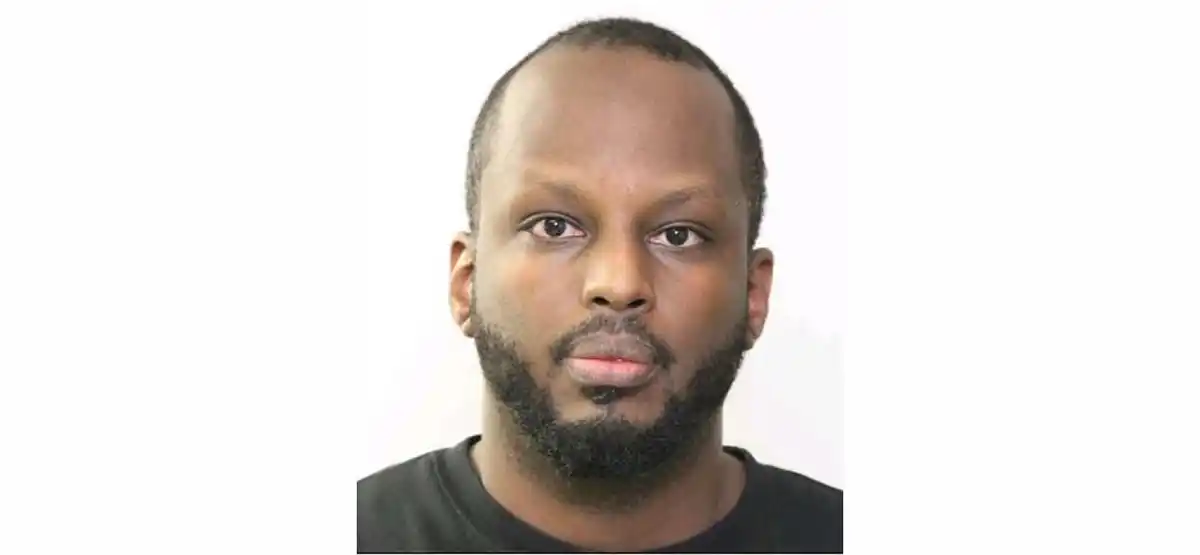
Christian Nyabirungu, 35-year-old murder suspect with black hair and beard in police mugshot photo

Alberta RCMP seek Christian Nyabirungu in 2018 Strathcona murder

Alberta RCMP Major Crimes Unit continue seeking public assistance to locate a man wanted on a Canada-wide warrant in connection with a 2018 murder in Strathcona County.

Christian Nyabirungu, 35, is wanted for first-degree murder, kidnapping and aggravated assault in relation to the Sept. 13, 2018, murder of Aldane Mesquita.

Nyabirungu may have changed his appearance but is described as having black skin, six feet two inches tall, weighing 240 pounds with black hair and brown eyes.

He has ties to Edmonton, North Battleford, Sask., Toronto, Ont., and has family in Montreal, Que.

Nyabirungu is considered dangerous and should not be approached by the public.

Seven people have been charged in connection with Mesquita’s murder. In March 2019, police charged Omar Abdirizak Omar, 33, Clement Fofie, 34, Roger Rurangwa, 31, and Mohammed Jawara, 29, all of Edmonton, with various combinations of first-degree murder, kidnapping and aggravated assault. Two additional men, Tyson Richard Clark, 30, and Jean Leon Musoni, 30, were also later charged with first-degree murder, kidnapping and aggravated assault.

Anyone who sees Nyabirungu or has information about his whereabouts should not approach him but call Strathcona County RCMP at 780-467-7741 or local police.

Those wishing to remain anonymous can contact Crime Stoppers at 1-800-222-8477 (TIPS) or online at www.tipsubmit.com.


Read More from Alberta RCMP

Missing persons, crime, accidents, fire, death investigations and more.

RCMP Crime Map

View approximate locations of thefts, break and enters, missing persons and high-crime areas in Alberta here.

If you see a crime in progress or need police assistance in an emergency, call 911.

Anonymous reporting through Crime Stoppers and cash rewards

Crime Stoppers allows tip sharing without disclosing personal information. An ID number and password are provided to follow up on tip status or add details.

Cash rewards up to $2,000 may be available for tips leading to an arrest. Higher payouts apply to serious crimes like murder, sexual assault, drug and weapon seizures, and human trafficking.

Call in your tip: 1-800-222-8477 Submit tip online

Online crime reporting (under $5,000)

If you are the victim of property crime such as theft or vandalism under $5,000, online reporting is available 24/7.

Contact your local RCMP or Crime Stoppers with information about illegal activity.

Alberta | AB, Crime, Edmonton – Alberta, Montreal – Quebec, North Battleford – Saskatchewan, Strathcona County – Alberta, Toronto – Ontario, Wanted Persons

A rolled-up newspaper with the headline "Economics" lies on a white surface next to a pair of eyeglasses and a white coffee cup.

Think tank says Canada needs new economic model beyond tariff concerns

A new report from Canada’s C.D. Howe Institute warns that U.S. tariffs have exposed deeper economic weaknesses that have been undermining the country for years.

The report, titled “Shaken by Tariffs, Still Weak from Within: Canada Needs a New Economic and Fiscal Model,” argues that Canada’s economic struggles go far beyond trade disputes. Author Don Drummond, a fellow at the institute and Queen’s University, points to sluggish productivity growth, mounting public debt and a tax system that discourages investment as fundamental problems.

Canada’s GDP per capita has fallen from above the OECD average to merely matching it, and projections show the country will have the weakest per-capita growth among developed nations through 2060. Business investment in machinery, equipment and intellectual property lags significantly behind U.S. levels, while research and development remains weak.

The fiscal picture adds another layer of concern. Both federal and provincial governments carry heavy debt loads, and Canada’s tax structure relies too heavily on income and profit taxes rather than consumption taxes that economists consider less harmful to growth.

Drummond argues that Prime Minister Mark Carney’s promised economic transformation will struggle without addressing these underlying issues. Plans to boost domestic production, develop Canadian expertise and expand into new markets will falter unless productivity and competitiveness improve and internal trade barriers disappear.

“Canada faces a crisis emanating from the US tariff threat – but it should not distract us from the deeper, longer-standing weaknesses that continue to undermine our economy,” Drummond says. The country must diversify and build resilience while tackling “the baggage we have carried for a long time.”

The report comes as Canada grapples with uncertainty over its trade relationship with the United States, which remains its largest trading partner. While tariffs grab headlines, the institute suggests the real challenge lies in fixing structural problems that have been building for decades.

The C.D. Howe Institute describes itself as Canada’s most influential think tank, focusing on economically sound public policy research.


Alberta | AB, Economics, General Interest, Tariffs

A yellow triangular warning sign with an exclamation mark and the word "Accident" placed on a road, next to an orange traffic cone. Blurred figures and vehicles are visible in the background.

Saskatchewan teen killed in single-vehicle crash near Morrin

A 17-year-old Saskatchewan man was killed in a single-vehicle collision near Morrin on Thursday.

According to RCMP, Three Hills officers responded at approximately 12:46 p.m., July 31, to an abandoned, rolled vehicle on Highway 27 east of the Morrin Bridge. The lone male occupant was declared deceased on scene.

Two local fire departments, EMS and Drumheller RCMP members also attended. The incident resulted in the shutdown of the highway for several hours while police investigated.

There were no other involved vehicles or persons. The circumstances of the collision remain under investigation.

The officers of Drumheller RCMP send their deepest condolences to the family and friends of the deceased.

Anyone with information about this incident is asked to contact Drumheller RCMP at 403-823-7590.

Those wishing to remain anonymous can contact Crime Stoppers at 1-800-222-8477 (TIPS), online at www.P3Tips.com or by using the “P3 Tips” app available through the Apple App or Google Play Store.


Accidents | Motor Vehicle | Water | Air, Alberta | AB, Drumheller – Alberta, Morrin – Alberta, Three Hills – Alberta

Willow Lake Métis challenge uranium project over lack of consultation

The Willow Lake Métis Nation has filed a judicial review application in Federal Court, arguing that Canada has failed to uphold its constitutional duty to consult the community about proposed uranium mining projects in northwest Saskatchewan.

The June 20 filing targets developments by NexGen Energy and Paladin Canada in the Patterson Lake region, about 150 kilometres northeast of Fort McMurray. The Métis community says its Section 35 rights under the Constitution Act are being threatened by the federal government’s inaction.

“These projects fall within the Clearwater River watershed, which flows directly west toward our community,” said Matthew Michetti, manager of government and industry relations for the Willow Lake Métis Nation. “Any disturbance, including water withdrawals or discharges, poses a risk to the land and people who rely on it.”

Michetti said the failure to consult the Nation is particularly concerning given the history of land use in the area.

“Equally troubling is the continued alienation of our traditional land base, land our Citizens have relied on for generations. Canada’s failure to include Willow Lake Métis in consultation is unacceptable.”

The Nation contends its people have longstanding cultural and ancestral connections to the Patterson Lake region that transcend current provincial boundaries. These ties, rooted in the fur trade, support the Nation’s claim to the area and reinforce the need for consultation.

While the Willow Lake Métis Nation says it does not oppose development, it wants to ensure its rights and interests are respected.

“We’re committed to responsible development and open dialogue,” said Michetti. “We’ve made multiple efforts to engage both the federal government and the project proponents. While we respect agreements made with other rights bearing nations, our focus remains on ensuring that the Willow Lake Métis Nation is not excluded. Our duty is to the historic families of this territory and to the stewardship of our traditional lands.”

The Nation is urging the federal government to meet its constitutional obligations and begin formal consultation.

Alberta Métis Nations, Cultural Perspectives, Environment, Indigenous Perspectives, Indigenous Treaty Rights, Saskatchewan Uranium Mining, Willow Lake Métis Nation