Province: Ontario | ON

Randy Plain Eagle brings his story and his stage home

Randy Plain Eagle always felt he was different. He liked playing with Barbies and with the girls, rather than doing what the other boys did, and the bullying that followed taught him to hide.

“It really affected me,” he says, “I didn’t want to be seen.”

So he started skipping school.

By the time he reached Piikani Nation Secondary School, he longed to be seen and dreamed of acting. The school learned he hoped to perform and brought in Trickster Theatre, which built a production for the whole school about Randy setting out on a vision quest.

It was his first time working with lights, choreography, sound and other performers. When it ended, the audience stood and applauded, and afterward, people came to Randy’s part-time workplace to tell him how great he’d been in the show.

“This is what I’m meant to do,” he remembers thinking. In those moments Randy experienced the validation he didn’t feel growing up.

He is now 33 and an artist building a career with Justin Many Fingers, his partner in life and work. September has barely given Randy room to breathe, but he is revelling in it all.

On Sept. 2 he started his second year of arts and cultural management studies at MacEwan University, taking a full course load, and on Sept. 18 made his runway debut at the Indigenous Fashion Show at Casa in Lethbridge.

Two men in high-visibility work shirts stand in a construction site above text that reads “Daventry Development’s share: $18,271,” followed by a summary of their business, the URL whatsyourshare.ca, and the Vision Credit Union logo.

The next day, he and Justin spoke at Lethbridge Public Library’s Word on the Street festival about the Niitoyis Method, a Blackfoot approach to creating theatre that Justin developed, modelled on the structure of the teepee, and how it shaped Randy’s one-person show Sugar.

Last Friday the pair were busy helping with the Drum Grid choreography that moved drummers and powwow dancers around Fort Macleod’s main street.

All of this followed Aug. 31, when Sugar, Randy’s show about addiction, survival and recovery, was presented at Piikani Nation for International Overdose Awareness Day.

Randy has big plans and getting this far took him across the country and back.

Leaving home

Randy grew up one of eight children raised by a single mother, with a few early years in Pincher Creek before the family moved back to Brocket. Like many Indigenous families, his carried intergenerational trauma, including addiction and children being removed from their homes. Randy saw that cycle repeat in his own childhood.

“When I was about 16, I finally started to walk into my own confidence, but I was still trying to figure out who I was as a person and as a young, Blackfoot man,” Randy says. “I was by myself.”

Around that time, the late Troy Emery Twigg brought a performance workshop to Brocket. Troy was a Kainai dancer, choreographer and director who taught across the country, including at the Centre for Indigenous Theatre.

Randy shared his desire to perform with Troy, who told him about “this really cool opportunity out in Toronto.” Finishing high school and the Trickster performance came first, but the teenager now had a goal and was set on making a name for himself.

Get Stuff’d meat and seafood shop sign, located at 214 13th St. in Fort Macleod, open Thursday through Saturday from 12 noon to 6 p.m., phone 368-996-1968, follow us on Facebook at Get Stuff’d.

He spent weekends drinking and hanging out with friends.

“I’d drink all weekend, go home, wake up, go back to school,” Randy says. “I was managing it and just being a teenager, so at the time it wasn’t a problem.”

He was serious enough about acting to round up letters of support, look for funding and get a plan together. Randy’s mom and sister dropped him at the Greyhound depot in Fort Macleod, and 63 hours later he landed in Toronto.

Randy’s journey at CIT taught him to act, find his voice and create performances through an Indigenous lens. Ironically, it was also where he first met Justin, though the two came from neighbouring reserves.

There was a dark side to Randy’s time in Toronto and he discovered city life was fast and chaotic. It became a balancing act between school and the party, with him struggling to stay afloat.

“At that time I was still very much in the closet, not really stepping into who I am and what my identity is,” Randy says.

Along with the other challenges, he was young and naive, and navigating being a Two Spirit person.

After graduating, Randy hung onto the party lifestyle.

Job ad for “Shootin’ the Breeze” seeks part-time and full-time staff for photography, writing, and reporting; contact publisher@shootinthebreeze.ca. Background shows printed news text and a hand holding a voice recorder.

“That would be OK on Friday but by Sunday, I was just so damn depressed and questioning everything I’m doing,” he says. “Why am I here? I’m so lonely. I feel so disconnected, I feel so lost.”

He was 23, “and up until then it was trauma after trauma after trauma.”

It was time to make the bus trip home to Alberta.

The long way back

Randy went to Calgary, where he hoped to put his experience and skills to work. He researched companies and did some workshops, but found himself still drinking and partying. Nothing had changed except being introduced to meth.

“I was in a new environment doing the exact same shit,” he says.

After a performance in Brocket, Randy and his friends celebrated with drinks as he’d learned was the norm in the Toronto arts scene.

“It’s not normal for native people,” Randy says. “That’s not how we celebrate.”

Announcement for Family Violence Prevention Month flag raising event on November 17 at 10 a.m. outside the Pincher Creek Library, hosted by the Pincher Creek Women’s Emergency Shelter Association.

But it’s what they did, and it led to a crash in Calgary when the driver, who had been drinking, hit a pole. Randy almost lost his life. His leg was badly cut through ligaments and tendons, and doctors said he might not walk again. It was devastating news for the young man who loved to dance and move.

“That’s what made me feel free and so that fear of not being able to do that again was very frightening, but then I was introduced to morphine for pain management,” Randy says.

He found it numbed more than his leg. For a while, the emotional pain he’d been carrying went quiet and he felt almost “normal.”

He missed an audition, but when he heard the director was leading a workshop in Pincher Creek, he went to find her. She asked whether he’d be healed by summer and when he said yes, she hired him.

He was one of only four Indigenous performers cast in the 2017 production of The Dream Catchers, a Canada 150 show that toured coast to coast. He says it gifted him the hoop dance but it also brought him face to face with Canada’s history with Indigenous people, and the road was lonely.

“You just felt all of the weight of the oppression and I think that was when I first learned of the bad, bad history that Canada has with my people,” he says. “I just became really bitter on that project. Every time we finished the show I drank.”

When the tour ended, Randy had a layover in Calgary and chose to stay rather than continue to Lethbridge. That choice, he says, is where the cycle of addiction began to snowball.

He worked for independent theatre companies for a time but, as his addiction deepened, Randy lost his housing and cycled through detox and relapse.

After about five years in the city, Randy went missing. His family and community members went to Calgary to search for him, plastering posters everywhere.

“When I realized my face was on almost every pole, I realized that I was loved and that my family was there looking for me and trying to take me home. That was the moment when I started to try,” Randy says.

“Recovery is not a straight-and-narrow path. For me it’s always getting back up and keeping trying.”

Randy needed to get sober for himself and for his family. In 2022, he went through detox and about 60 days in the pre-treatment program at Inii House on Piikani Nation, then treatment in Medicine Hat. He has been sober since 2023.

It was time to go home.

‘You have a story’

Randy and Justin also reconnected in 2022. After a family dinner, where Randy’s mother told Justin what Randy was like when he came home, Justin said, “Randy, you have a story.”

He wasn’t ready to tell it yet.

“There was guilt and shame in my body,” Randy says.

Justin reminded him the story was a gift that could help people. Randy asked himself how he could use what he’d lived through and learned, and started to write.

Ace of spades card on ad for Chase the Ace at the Pincher Creek Legion

A professional development grant took him to Decidedly Jazz Danceworks in Calgary, a company he had researched years earlier and written off as out of reach. He was invited as an artist in residence and Sugar was developed there.

The Canada Council for the Arts funded its research and creation in March, and it played the Ignite! Festival in Calgary this spring.

Then Randy brought it home.

He spent the summer in a student position with Aakom-Kiyii Health Services and Akoka’tssini Mental Wellness, and together they built the Aug. 31 gathering to honour loved ones lost to addiction, and offer support and wellness information to everyone who came.

The show opens gently, with a grandmother telling her grandchildren a bedtime story about the Niitsitapi, the real people. Then Napi, the Blackfoot trickster, steps in and hands candy out to the audience, promising a sweet story with a warning attached.

“There’s always a cure for too much sugar,” he tells them, “and that, my friends, is more sugar!”

Randy plays every role. There is Sister Bear, who shares the boy’s childhood and later leads him into the city’s nightlife; Kitty, a street-smart booster who turns shoplifting into an art form; Danny, whose sweetness is its own kind of danger; and the Candyman, who runs downtown. On the street, the boy goes by Shugs. Sugar itself gets a voice too, promising confidence and belonging to anyone lonely enough to listen.

There is the mother, searching for her missing son, walking the back alleys and visiting shelters with posters and desperate hope until someone on the street says they know him. When the young man is close to dying, the spirit of a grandmother, wearing his mother’s face, turns him back, saying “Family is medicine.”

Event flyer for The Hometown Holiday Market on November 14, 2026, at the Heritage Inn in Pincher Creek, featuring a list of vendors and event details set against a snowy holiday background.

The show doesn’t gloss over drug use, overdose or the sickness of withdrawal, but it also has humorous moments and ends with a joyful dance.

Sugar is not an exact retelling of Randy’s story but draws on his life and people he met along the way.

Justin says a powerful moment came in the talk-back afterward, when a woman said her daughter has struggled with addiction for years and that she finally understood her after seeing the show.

That’s the point. “To have people feel something and work through it, and remind them that they’re not alone and that hope is possible, no matter how hard you struggle,” Randy says.


Justin Many Fingers joins Randy Plain Eagle for the talk-back after the performance of Sugar.

Submitted photo


Coming home

Randy made the dean’s list in his first year at MacEwan, where he studies online to learn the business side of running an arts company. His versatility as a performer and speaker is opening opportunities for him to give back to the community through Plain Eagle Productions.

Justin completed a master of fine arts degree at the University of Calgary this year, with research on Blackfoot knowledge and performance. In Blackfoot, he says, there is no single word for “artist” because art has always lived inside ceremony, song, story and design.

Coming home was deliberate.

“All of our stories come from here,” Justin says, and Drum Grid showed what that can look like.

An older couple smiles while leaning on a wooden railing outdoors, above text describing their $879 profit share from Vision Credit Union and a website link.

Maria Crowshoe started the A’sitapiiksi Powwow Club in June because her grandson wanted to learn to dance. She saw Randy’s posters and asked him to teach the young dancers confidence and performance skills. He ended up choreographing and brought Justin in.

It was challenging to carry the spirit of powwow, which is celebration rather than performance, into a staged show, but they figured it out. Justin also says the setting mattered. Fort Macleod is where rations were handed out after the buffalo were gone and seeing young dancers celebrate on its main street felt like hope.

Randy and Justin are developing two versions of Sugar. One will be a full theatre production and the other a touring version suitable for schools, treatment centres and conferences. This includes creating a plan for audience members who need support and protecting the actor himself.

Other work is underway, including a Napi creation story, speaking engagements, a Treaty 7 anniversary project and “Two Directions,” a movement duet exploring Blackfoot understandings of Two Spirit identity. They also want to build an arts network that brings other nations’ shows to southern Alberta and takes theirs on the road.

The boy who once skipped school, so no one would see him, now stands on stage asking audiences to see one another and trust that anyone can find their way home.

If this story raises concerns for you or someone you love, Alberta’s 24-hour Addiction Helpline is 1-866-332-2322 and the Hope for Wellness Helpline for Indigenous people is 1-855-242-3310. Aakom-Kiyii Health Services can be reached at 403-965-3919.

Related stories

Drum Grid brings drums and dance to Fort Macleod’s Main Street

Addiction, Blackfoot Culture, Indigenous Arts, Indigenous Theatre, International Overdose Awareness Day, Napi, Performing Arts, Powwow Dance, Recovery, Theatre, Two-Spirit

Truth and Reconciliation Week invites everyone to listen

The National Centre for Truth and Reconciliation invites Canadians to spend the week before Sept. 30 learning, listening and reflecting during Truth and Reconciliation Week.

A five-day online series runs Sept. 21 to 25, and is open to anyone wanting to learn more about the history and legacy of residential schools ahead of the National Day for Truth and Reconciliation.

Each day brings a lunch-and-learn webinar with survivors, Indigenous leaders, artists, elders and other knowledge keepers speaking. The webinars run about an hour, ending with a question period between the moderator and guests.

The webinars start at 11 a.m. on Monday, Tuesday, Wednesday and Friday, with a noon start on Thursday. There are two sessions on Tuesday, with the first at 9 a.m. All sessions offer simultaneous English and French interpretation, along with American Sign Language interpretation.

Organizers say the sessions take on misconceptions about Canada’s colonial history and the experiences of Indigenous Peoples.

Registration is free at trw-svr.nctr.ca/lunch-and-learns. Webinar space is limited to 5,000 participants, but sessions are also streamed to YouTube for anyone who can’t get a spot.

Topics include protecting survivor truths, economic reconciliation, Indigenous-newcomer solidarity, residential school denialism and ways to identify and challenge misinformation about the residential school system, organizers say.

Another session focuses on Indigenous leadership and the experiences shaping Indigenous futures, including discussions of residential schools, the Sixties Scoop, First Nations child rights and the Missing and Murdered Indigenous Women, Girls and Two-Spirit movement.

A woman sorts food items into cardboard boxes at a food bank, with text above advertising Vision Credit Union’s Helping Hand Grants, which offer up to $10,000 for rural Alberta non-profits, with a QR code and an application deadline of January 17, 2027.

The week closes with a session on Indigenous youth perspectives on health and well-being, exploring holistic approaches to wellness and the challenges faced by youth living with the impacts of residential schools and related systems.

The centre also keeps a free online library of recorded sessions with survivors, Indigenous artists and athletes, available year-round to anyone who registers.

National Day for Truth and Reconciliation recognizes the history and multi-generational effects of residential schools and honours survivors, their families and communities.

The centre’s national commemoration, Remembering the Children, is broadcast live Sept. 30 at 10 a.m. from Parliament Hill. No registration is needed to watch or attend in person.

Support is available 24 hours a day through the Residential School Survivor Support Line at 1-866-925-4419. First Nations, Inuit and Métis people can also reach the Hope for Wellness Help Line at 1-855-242-3310 or online at hopeforwellness.ca.

Economic Reconciliation, First Nations Métis and Inuit | FNMI, Indigenous Youth, Missing and Murdered Indigenous Women Girls and Two-Spirit | MMIWG2S, National Day for Truth and Reconciliation, Residential Schools, Truth and Reconciliation Week

Chad Kennedy and a group of supporters pose outside a Legion building with campaign signs.

Chad Kennedy kicks off 2026 Sea to Sea for PTSD cross-Canada journey

Crowsnest Pass resident Chad Kennedy is once again out to shatter the stigma around mental health and PTSD while supporting families affected by suicide. His Sea to Sea for PTSD cross-Canada walk, the Journey Home 2026, started June 1 in Sarnia, Ont.

Chad officially stepped off from Legion Branch No. 62, beginning a months-long trek that will take him to Vancouver Island by the end of September. The date coincides with both PTSD Awareness Month and Men’s Mental Health Month.

“It’s a double whammy and I’m proud to be an advocate for both,” Chad says.

The walk is part of Chad’s mission to raise awareness about post-traumatic stress disorder, operational stress injuries and mental health challenges among military personnel, veterans and public-safety professionals.

Many in southwestern Alberta already know Chad’s story.

The Canadian Armed Forces veteran and former Alberta Sheriff Highway Patrol member was diagnosed with PTSD in 2018. Chad struggled for years with trauma traced to hazing he endured during basic training in 1991, a weight he carried into his law enforcement career.

Chad reached a breaking point after being a first responder to the July 18, 2020, Columbia Icefield bus crash in Jasper National Park.

On Aug. 2, 2020, Chad was moments from a planned suicide but had a big revelation. At this pivotal point, he found inspiration and began an intensive healing journey that ultimately led to founding Sea to Sea for PTSD.

Event poster for a Secondhand Dreamcar concert at the Empress Theatre on November 20, 2026, at 7:30 PM, featuring a photo of the band members.

Through therapy and treatment, he recovered enough to launch a cross-country awareness campaign focused on PTSD and mental health, particularly among current and former military personnel and public-safety professionals.

Before the official June 1 launch, Chad and his team spent several weeks at community walks and mental health events across Ontario and the northeastern United States.

“The pre-walk festivity started May 16. We did a walk through Vermont State and New York State,” Chad says. “We had amazing support from law enforcement down there.”

The team also visited Peterborough, Pelee Island and Kingsville, where community members gathered to hear his story and learn more about the initiative.

Since stepping off in Sarnia, Chad has averaged more than 30 kilometres a day. In the first five days, he walked 157 kilometres — 188,906 steps for those who like to keep a step count.

Chad jokes that a trek like this at age 53 is no walk in the park but life on the road has become his “peaceful place,” furthering his healing journey.

“I sort of put the pain off to the side and, like I’ve mentioned before, I don’t wear a headset or anything, I’m not listening to music, I just listen to the sounds around me and listen to what my body’s saying,” he says.

Despite the physical strain, he says walking remains an important part of the healing process for his PTSD, his mental health and even the recent loss of his father, a retired RCMP officer who struggled with complex PTSD.

“I was really looking forward to hitting the road and having some downtime to process the loss of my dad and I’m looking forward to the walk home,” Chad says. “I keep reminding myself that it’s not a race, it’s a journey.”

The 2026 campaign is the latest chapter in a mission that began with Chad’s first Sea to Sea walk in 2022. While initially focused on his own recovery, he says its purpose has evolved and the experience has helped him better understand who he is beyond the uniform.

“I think now I realize my purpose and that is I’m a helper,” he says. “I’m not searching for myself anymore, I’ve sort of refound myself. It’s never about redefining yourself, it’s about refining who you are in life.”

Beyond awareness, this year’s campaign is also raising money to create scholarships for children of military members or public-safety professionals who die by suicide. The scholarships are intended to help children stay focused on their future, while easing some of the financial burden families may face after such a loss.

A $13,000 goal has been set for the Journey Home 2026, with proceeds going to Honour Our Children Scholarship Funds, which will fund two $500 scholarships per province and territory.

“Children don’t have a choice when it comes to losing a parent,” Chad says. “I truly believe that we have a lot of amazing young individuals, our future, who are gonna go on to do great things, so it’s our way of giving back.”

Chad also hopes to encourage people to speak openly about their struggles and seek help when they need it.

“Our slogan is #never alone,” he says. “People are almost afraid to speak up because they feel that they’re the only ones that have gone through what so many other people have gone through.”

He hopes those who hear his story come away knowing support is available.

“It’s OK to talk about this, and if you need a safe spot, I’ll be the ears, any of our team members would be the ears — and not just listen to what you have to say, but hear what you have to say,” Chad says.

Although he expects the walking chapter of Sea to Sea for PTSD to conclude this year, the organization will continue.

“Just because the walking journey is going to be done this year doesn’t mean Sea to Sea for PTSD will go away,” Chad says.

He hasn’t mapped out every stop, but this month’s Ontario stops include Thunder Bay on June 21 and Kenora on June 29. Updates on Chad’s journey are posted on Sea to Sea for PTSD’s social media.

Those wishing to support the Journey Home 2026 can make a donation by visiting seatoseaforptsd.ca or by sending an e-Transfer to chad.kennedy@seatoseaforptsd.com.

If you or someone you know is struggling, help is available any time. In Alberta, call the Mental Health Help Line at 1-877-303-2642. Across Canada, call or text the 988 Suicide Crisis Helpline. Veterans, former RCMP members and their families can also reach the VAC Assistance Service at 1-800-268-7708, available around the clock.

Mental Health, PTSD, Veterans

Graphic of a keyboard with a large green button that says "online petition"

Alberta strike fuels national petition on notwithstanding clause

Teacher leaders across Canada are urging Ottawa to curb the use of the notwithstanding clause in labour disputes after Alberta became the first province to invoke the constitutional provision to end a provincewide teachers’ strike and impose a contract.

The Canadian Teachers’ Federation board of directors has launched a national petition to that end, asking the federal government to repeal or annul future provincial law that uses the clause to strip workers of the right to strike and bargain collectively.

The petition was announced June 2 alongside a joint statement signed by 21 teacher organization leaders representing more than 420,000 teachers and education workers across the country.

The leaders met June 1 in Banff to discuss what they describe as a growing pattern of constitutional overreach and released their joint statement the following day.

The petition, which calls on the federal government to affirm its responsibility to uphold Charter rights across Canada, is open until July 24 and can be found online at ctf-fce.ca.

Speaking at the event, leaders called the governmental overreach a “dangerous practice” that cannot be allowed to continue or become normalized.

“Without the balancing power that court scrutiny provides to individuals and groups of citizens, it is far too easy for governments to abuse their legislative authority and to the detriment of Canadians,” said Clint Johnston, president of the Canadian Teachers’ Federation.

The move follows the Alberta government’s use of the notwithstanding clause last October, when it invoked Section 33 of the Canadian Charter of Rights and Freedoms to pass Bill 2, the Back to School Act. This ended a legal provincewide strike by more than 51,000 Alberta teachers and imposed a four-year collective agreement.

Madison Stocker, president of Alberta Teachers’ Association Local No. 14, supports the campaign and the organizations behind it.

“I agree with what was said by the ATA and CTF and I am glad they are continuing to fight to support teachers,” Stocker says.

The strike began Oct. 6, following months of failed negotiations between the Alberta Teachers’ Association and the Teachers’ Employer Bargaining Association over wages, funding and overcrowded, complex classrooms.

The government introduced Bill 2 during a special legislative session on Oct. 27, 2025, passing it through all three readings in a single day with limited debate.

Teachers were ordered back to work by Oct. 29 and the legislation carried penalties up to $500 per day for individual teachers and $500,000 daily for the union if members participated in future job action.

By invoking the notwithstanding clause alongside the back-to-work legislation, the Alberta government took the rare step of shielding the law from Charter challenges before they could be launched, a move teacher leaders say has set a dangerous precedent.

Jason Schilling, president of the Alberta Teachers’ Association, says effects of that decision are still being felt.

“The wounds it leaves behind are real, they’re lasting, but they do not have to be inevitable,” he says. “The message sent to workers is that their rights are somehow conditional, temporary and negotiable when politically convenient.”

Schilling described watching the fallout play out in classrooms and staffrooms across the province, as teachers who had dedicated themselves to their students and communities feeling their commitment was met with disregard.

“Once that trust is broken, rebuilding will take years,” he says. “Morale suffers, relationships fracture, young people begin to question whether public service that supports our communities is worth the sacrifice. Experienced professionals begin to leave.”

The joint statement frames the Alberta situation not as an isolated incident but as part of a broader national trend.

According to the statement, the notwithstanding clause has been invoked more frequently in the past five years to deny human and democratic rights than at any other point in recent memory, including Alberta’s Bill 2 and Bill 9.

Bill 9, the Protecting Alberta’s Children Statutes Amendment Act, was introduced in November 2025 by Premier Danielle Smith and Justice Minister Mickey Amery. The legislation proposed amendments to the Health Statutes Amendment Act, the Education Amendment Act and the Fairness and Safety in Sport Act.

Besides the two Alberta bills, the statement points to two separate uses of the notwithstanding clause in Ontario in 2021 and 2022, Saskatchewan’s Bill 137 in 2023 and Quebec’s use of the clause in 2022.

“When governments invoke the notwithstanding clause to end labour disputes, they are not simply legislating,” the statement reads. “They are telling workers that their rights are conditional and that the Charter protections all Canadians depend upon can be switched off when it is politically convenient to do so.”

Johnston said the petition was prompted specifically by the events in Alberta but stressed the implications reach well beyond one province or one profession.

“If any government is allowed to bulldoze worker rights and tip the bargaining tables in their favour in this way, it will happen again, and it could be any worker in Canada who suffers the consequences of that misuse in the future,” he said.

The federation and its provincial and territorial counterparts are calling on all levels of government to commit to good-faith collective bargaining, pledge not to invoke the notwithstanding clause in the context of labour relations and ensure courts have the opportunity to examine the constitutionality of legislation before the clause is considered.

They are also asking the federal government to take action to review and restrict provincial and territorial use of Section 33 when it is applied to deny citizens’ fundamental democratic and human rights.

The joint statement is explicit that the notwithstanding clause was designed as a safeguard to be invoked only in exceptional and demonstrably justified circumstances, not as a routine tool for governments to bypass the courts during legitimate labour disputes.

“The notwithstanding clause was intended to be used in the most extreme of cases,” Johnston said. “Unfortunately, it is becoming far too common for governments to use Section 33 simply to make legislation stick that they know would not stand up to judicial scrutiny, and that is unacceptable.”

Schilling echoes that warning, saying the consequences of silence on the issue are too great to ignore.

“Rights that can be suspended when they become inconvenient are not rights at all,” he said. “Silence makes this move by governments easier. Our solidarity today makes it harder.”

The presidents of all provincial and territorial teachers’ organizations encourage Canadians who share their concerns to sign the petition before it closes on July 24.

Back To School Act, Charter Rights, Collective Bargaining, Labour Disputes, National Petitions, Notwithstanding Clause, Section 33, Teacher Strike

Yellow caution tape stretches across a grassy outdoor area with blurred trees in the background, indicating a restricted or hazardous zone.

Ontario woman killed in Highway 16 pedestrian collision

A 35-year-old Ontario woman is dead after being struck by a vehicle on Highway 16 near Vermilion.

Vermilion RCMP received multiple calls around 5:30 a.m. on Jan. 30 regarding a pedestrian walking on the highway. Shortly after, police, fire and EMS were dispatched to a collision in the area.

According to initial calls, the pedestrian was walking in the same direction as traffic while wearing dark-coloured clothing, making her difficult to see.

The woman, a resident of Dundas, Ont., died from her injuries.

Vermilion RCMP, with assistance from an Alberta RCMP collision reconstructionist, is continuing the investigation. Police say there is no reason to believe the collision was criminal in nature.

“This is a dreadful situation for all involved, be it the pedestrian, their family, the driver, or the emergency personnel on scene,” said Cpl. Brittany Pegg of the Vermilion RCMP. “I would like to thank the public who was travelling on Highway 16 for being respectful to all of the emergency crews who were working on scene.”

Accidents | Motor Vehicle | Water | Air, Alberta | AB, Dundas – Ontario, Vermilion – Alberta

Chad Kennedy kneels in front of a group of supporters gathered beside a Sea to Sea for PTSD vehicle.

Veteran walks across Canada to break PTSD stigma

When Chad Kennedy stepped onto the road April 26 in St. John’s, N.L.,, his goal was simple but profound — to keep a conversation going that, for many, remains too hard to start.

A non-combat veteran of the Canadian Armed Forces and former law enforcement officer, Kennedy recently completed his second Sea to Sea for PTSD cross-country walk. The Crowsnest Pass man’s 135-day journey, aimed at breaking the stigma surrounding mental health battles among those who serve, concluded Sept. 7 in Windsor, Ont.

Kennedy carried out his mission by walking from community to community across Eastern Canada, meeting with veterans, first responders and civilians to break the silence surrounding post-traumatic stress disorder.

“Didn’t walk as much as I anticipated, but still got in about 3,200 kilometres,” he says. “You always want to do more, but as we grow there’s more focus around the awareness and conversations.”

Personal journey drives mission

The veteran’s journey through service, trauma and recovery is deeply personal. After joining the CAF in 1991, he faced severe hazing during basic training that left invisible scars. Kennedy carried this trauma into his later career in law enforcement.

Diagnosed with PTSD and anxiety in 2018, Kennedy spent years suppressing his symptoms.

The tipping point came when he was among initial first responders at the scene of the 2020 Columbia Icefield bus crush. He spiralled even deeper into PTSD, anger, anxiety and depression.

In the aftermath, he nearly took his own life before deciding, instead, to turn his struggles into a means of raising awareness. Kennedy saved himself and deliberately chose to start conversations that many, both in and out of uniform, are afraid to have.

Over time, he has grown more comfortable sharing the most difficult parts of his story, including many details of the hazing that were hidden for decades.

“For 30 years I didn’t talk about it. I was scared to tell that portion of my story,” he explains. “And you know what? Nobody retaliated. It was just another part of the conversation.”

Opening difficult conversations

Kennedy has travelled across the country, stopping in communities big and small. From Royal Canadian Legion branches to wellness lounges, he has held information meetings with strangers who quickly became friends.

“When you get into small towns, people don’t really know how to talk about mental health or where to start,” he says. “For a lot of veterans and first responders, it’s still a struggle to open up. But once they do, they start realizing they’re not alone.”

Kennedy’s openness and willingness to be vulnerable is the foundation of his advocacy, which, in turn, has inspired others to be vulnerable in their own right.

Female veterans, in particular, have approached him to discuss experiences with sexual assault and trauma, stories many had buried for years.

“It’s really eye-opening when you share stories of your own struggles and all of a sudden you’ve got others coming up to you and sharing their stories,” Kennedy says.

Powerful connections can save lives

An encounter in Sydney, N.S., exemplified the impact of connection when a paramedic struggling with complex PTSD came to one of Kennedy’s talks this year as a last hope for help. Kennedy connected him to a peer support group in the province, potentially saving his life.

“The hug that man gave me, the emotion behind that and the thank you, it was probably the most sincere thank you I’ve heard from another human being,” Kennedy says. “To this day, that gentleman is still with us on the right side of the dirt.”

Another powerful moment came in Windsor during a Canadian Mental Health Association walk for Suicide Awareness Month.

While speaking to about 1,000 people about suicide — a deeply personal subject he refuses to soften or sanitize — Kennedy shared that nothing was in his head and how he was simply going through the motions when he was in that suicidal state years before. He encouraged those who have lost someone to suicide to stop seeking answers about why.

He told them closure would never be found by doing so. His words resonated with the crowd, particularly with one woman who spoke to him afterward.

“She’d been looking for answers on the loss of her son for four years,” Kennedy says. “She told me that what I said gave her closure. Man, I cried — I buckled.”

While his experience has touched and impacted countless people, he continues to learn as much about himself as he does about others.

Next mission expands focus to children

Kennedy’s 2026 Sea to Sea journey will pick up in Sarnia, Ont., and head west to Vancouver Island, with a pre-walk event in the United States that will see him cross from Montreal into Vermont and New York before returning north.

This leg will raise money for education programs supporting children in public safety and military families affected by suicide. Kennedy wants to help these children and keep them focused on their future.

“When you meet loved ones who’ve survived their parents passing from suicide, it turns their world upside down. It’s about helping secure their future,” he explains.

Remembrance Day thoughts

With Remembrance Day approaching, Kennedy reflects on what the day means to him as both a veteran and a mental health advocate.

“It’s a time of mourning. It’s truly a time to remember,” he says.

“A lot of our veterans come home with those invisible wounds. I survived what I went through in the armed forces and in law enforcement, but just being at the ceremony and showing my support is huge to my veteran friends. It’s about camaraderie and about saying, ‘Hey man, you’re not forgotten.’ ”

Ultimately, Kennedy hopes Canadians carry forward a message of kindness, compassion and connection this Remembrance Day as they honour and reflect upon the sacrifices made by the men and women who have served.

“You have no idea what battle somebody is going through,” he says. “The simple gesture of a wave, a smile, a hello — it goes a long way. Just be kind to one another.”

To learn more about Sea to Sea for PTSD or make a donation, visit www.seatoseaforptsd.ca.

Mental Health, PTSD, Veterans

Logo with the word "Alberta" in stylized script above a blue banner that says "Government News and Notices" in white uppercase letters.

Privacy regulators discuss AI, cybersecurity at Banff meeting

Federal, provincial and territorial information and privacy commissioners concluded their annual meeting in Banff on Oct. 10, focusing on emerging issues related to artificial intelligence, cybersecurity and health data protection.

The two-day meeting, hosted by the Information and Privacy Commissioner of Alberta, brought together regulators and ombuds with responsibilities under access and privacy laws, according to a government news release.

AI and online harms

Emily Laidlaw, a Canada Research Chair in cybersecurity law and associate professor at the University of Calgary Faculty of Law, presented on online harms and the information ecosystem, covering AI, protection of children, misinformation and disinformation, freedom of expression and human-centric cybersecurity.

Health data storage

Michael Geist, Canada Research Chair in Internet and E-Commerce Law at the University of Ottawa, addressed the use of servers outside Canada to store health data of Canadians. He discussed whether data localization should be regulated under privacy or other laws in Canada.

Cybersecurity threats

Daniel Couillard and Richard Larose, both with the Canadian Centre for Cyber Security, provided an overview of their agency’s roles and mandate. They shared insights from the National Cyber Threat Assessment 2025-2026 and discussed opportunities for mutual support as privacy regulators continue dealing with massive data breaches caused by cybersecurity attacks.

AI in healthcare and tribunals

Paul Daly, chair in administrative law and governance at the University of Ottawa, discussed the use of AI by administrative tribunals, describing potential advantages and disadvantages.

Ross Mitchell, a professor in the Department of Medicine and adjunct professor in computer science at the University of Alberta and a fellow at the Alberta Machine Intelligence Institute, provided an overview of deep learning applications to healthcare. He addressed the use of AI scribes to record and transcribe physician conversations with patients and how to consider privacy rights in this context.

Legislative updates

Meeting participants discussed recent developments and expected changes to access and privacy laws across Canada, as well as key court decisions with implications for access and privacy.

“Our offices work collaboratively year-round on issues relating to privacy and access to information,” says Diane McLeod, Information and Privacy Commissioner of Alberta. “Our annual meeting offers the opportunity to spend time together in person to discuss emerging issues, share insights and experiences, and strengthen our joint commitment to protecting the access and privacy rights of all Canadians.”

McLeod says the work addresses critical issues facing individuals, communities, governments, organizations, businesses and society at large, many relating to challenges of digital technology.

“Most of us live much of our lives online, and while this brings benefits, it also presents privacy risks,” she says.


Alberta | AB, Artificial Intelligence | AI, Cybersecurity, Information and Privacy

Transparent padlock icons connected by lines overlay a blurred background of people and city buildings, symbolizing cybersecurity, data protection, and secure digital connections.

Ministers sign cybersecurity pact in Kananaskis

Federal, provincial and territorial ministers signed a cybersecurity collaboration agreement in Kananaskis to better protect Canada’s critical infrastructure and personal information.

The Sept. 23 FPT Ministerial Symposium on Digital Trust and Cyber Security brought together ministers to discuss building and protecting Canada’s digital economy. Alberta’s Technology and Innovation Minister Nate Glubish hosted the meeting.

The agreement aims to prevent cybersecurity events that may affect information confidentiality or availability. It allows governments to share real-time intelligence on cyber threats plus cybersecurity tools and services.

Intelligence sharing and response

The collaboration builds on discussions from the 2024 FPT Symposium, which focused on sharing information to respond quickly to cyber attacks. Ministers stressed increased government collaboration to address existing and emerging threats.

They also highlighted organizing a pan-Canadian tabletop exercise to enhance the country’s resilience to cyber attacks. However, no timeline was provided for this initiative.

Parliamentary Secretary Jenna Sudds, representing the federal government, said the agreement means stronger digital infrastructure. This allows communities to connect and do business securely.

Digital infrastructure priorities

Ministers discussed making it easier for people and businesses to connect across urban, rural and remote areas through digital infrastructure projects. They underlined the importance of publicly available digital infrastructure to help individuals and governments participate in the digital economy.

Ontario Minister Stephen Crawford said the collaboration addresses “complex and evolving challenges of our digital age.” It strengthens digital infrastructure while supporting Canadian innovation.

Supply chain and AI focus

Ministers noted the need to diversify hardware and software supply chains to support digital sovereignty. They acknowledged cybersecurity risks in procurement while committing to make buying easier and more accessible. They also want to strengthen government purchasing power in information technology.

They discussed artificial intelligence’s role in reshaping everything from automating tasks to enabling disease detection. Ministers pledged to leverage existing work and share open-source technology so governments have compatible AI tools.

Quebec Minister Gilles Bélanger noted his province’s active approach, including a 2023 collaboration agreement with British Columbia on digital identity services. Quebec also has a cybersecurity pact with Communications Security Establishment Canada.

Provincial perspectives

Several ministers highlighted the co-ordinated approach to digital challenges. Manitoba’s Mike Moroz pointed to expanding collaboration with municipal partners to protect critical services. British Columbia’s Diana Gibson noted that “no single government can face” complex cyber threats alone.

Saskatchewan Minister David Marit called the agreement “a pivotal advancement in safeguarding our citizens and businesses from cyber threats.”

Officials from Newfoundland and Labrador plus Nunavut attended as observers due to ongoing elections in those jurisdictions.

Alberta | AB, Artificial Intelligence | AI, British Columbia, Cybersecurity, Digital Economy, Digital Identity, Labrador & Newfoundland, Manitoba, Nate Glubish – Government of Alberta, Northwest Territories, Nova Scotia, Nunavut, Ontario, Prince Edward Island, Saskatchewan, Technology, Yukon

Three white envelopes blow in the wind in front of an open grey mailbox on the heading for Shootin' the Breeze Mailbox articles and letters to the editor.

News associations challenge Canada Post over community newspaper delivery

News associations respond to CUPW and Canada Post halting of delivery of unaddressed community newspapers

Letter:

On Sept. 16, multiple news publishing associations sent the following letter to Canada Post CEO Doug Ettinger and Canadian Union of Postal Workers president Jan Simpson:

On behalf of the members of the Alberta Weekly Newspapers Association, B.C. & Yukon Community News Media Association, Hebdos Québec, Manitoba Community Newspapers Association, National Ethnic Press and Media Council of Canada, News Media Canada, Ontario Community Newspapers Association and Saskatchewan Weekly Newspapers Association, we are writing to express our extreme disappointment in both Canada Post and CUPW.

Both of you are treating unaddressed community and ethnic newspapers like “junk mail.”

Mr. Ettinger, your decision to no longer exempt community newspapers with commercial inserts from Canada Post’s Consumers’ Choice program effectively treats fact-based, fact-checked Canadian journalistic content as “junk mail.” You made that decision without proper stakeholder consultation or economic/social impact analysis.

Ms. Simpson, your recent decision to neither process nor deliver unaddressed flyers (Neighbourhood Mail) — whether intended or not — is holding community newspaper publishers hostage and is depriving Canadians of fact-based, fact-checked community news.

Community and ethnic newspapers keep Canadians informed, engaged and connected in hundreds of communities across Canada. Many are small businesses, owned by local entrepreneurs, who are struggling just to keep the lights on and make payroll in the face of the loss of advertising to American big tech companies.

Let us be clear: community newspapers, with or without commercial inserts, are not “junk mail”; they are a vital source of information for Canadians. Our members are good paying customers of Canada Post, and we resent this shabby treatment. As you work out your differences, we hope both sides will bargain in good faith, and we call on the two of you to ensure that the processing and delivery of unaddressed community newspapers — with or without commercial inserts — resumes immediately.

Thank you for your urgent attention to this matter.

While this action doesn’t directly affect Shootin’ the Breeze subscribers, it impacts a number of Alberta newspapers whose publications are distributed through the Canada Post Neighbourhood Mail program.


Shootin’ the Breeze welcomes your voice.

The Breeze Mailbox is a space for sharing thoughts, stories, and conversations about what matters locally — from letters and opinion pieces to news releases and reader notes.

The views expressed here are personal and don’t necessarily reflect those of our team or ownership, but we believe in making space for respectful dialogue and community perspective.

Submission guidelines:

  • Keep it under 800 words
  • Include your full name and contact info
  • Be respectful and constructive

We reserve the right to edit for clarity, length and tone

Have something to share? We’d love to hear from you. Send your submission to publisher@shootinthebreeze.ca.

Alberta | AB, Alberta Media, Alberta Newspapers, Alberta Weekly Newspapers Association | AWNA, BC and Yukon Community News Media Association, BC Newspapers, British Columbia, Canada Post, Ethnic Newspapers, Hebdos Quebec, Manitoba, Manitoba Community Newspapers Association, Manitoba Newspapers, National Ethnic Press and Media Council of Canada, News Media Canada, Ontario, Ontario Community Newspapers Association, Ontario Newspapers, Quebec, Quebec Newspapers, Saskatchewan, Saskatchewan Newspapers, Saskatchewan Weekly Newspapers Association, Yukon, Yukon Newspapers

A brain-shaped wooden puzzle lies on a dark surface, with one piece missing and placed nearby, symbolizing problem-solving or mental challenges.

PT ministers unite on addiction service gaps

Provincial and territorial ministers responsible for mental health and addiction met Sept. 22 in Banff to address service gaps and strengthen collaboration on mental health priorities across Canada.

A Government of Alberta report says the ministers committed to collaborative action on several key areas including building system capacity, sharing approaches for individuals who may pose risks to themselves or others, and seeking long-term federal funding partnerships.

Alberta’s Mental Health and Addiction Minister Rick Wilson chaired the meeting and will lead a new Provincial-Territorial Forum of Ministers Responsible for Mental Health, Addiction and Recovery created during the session.

Key collaboration priorities

Ministers agreed to continue building mental health and addiction system capacity to address service gaps and strengthen primary and acute care supports. They will share information and approaches to support individuals with serious substance use or mental health issues.

The ministers committed to working with Indigenous governments and Indigenous-led organizations to advocate for appropriate federal funding. They noted Indigenous communities continue being disproportionately impacted by mental health and addiction issues, particularly the addiction crisis.

They will seek meaningful and long-term funding partnerships with the federal government, including renewal of existing mental health bilateral agreements. Ministers also want capital and operational investments to better support individuals with complex mental health or addiction issues.

Federal advocacy efforts

The group will advocate for federal collaboration and funding for integrated youth services while respecting models developed by each province and territory. They want approaches focused on child and youth needs with increased emphasis on early intervention.

Ministers will also advocate for federal research funding through pan-Canadian Health Organizations. They want this funding aligned with provincial and territorial priorities to ensure research drives evidence-based service delivery meeting regional needs.

New forum structure

The new provincial-territorial forum recognizes the need for increased discussion and collaboration on policies and programs addressing mental health and addiction issues. It will focus on moving individuals towards recovery across the continuum of care.

Wilson emphasized the importance of continued federal partnership in sustaining and expanding community services.

“We are united in our commitment to improving mental health and addiction outcomes for all Canadians,” Wilson said. “By working together and aligning our efforts, we can strengthen supports, close service gaps, and ensure that all Canadians — especially those most at risk — receive the care they need.”


Addiction Services – Alberta, Alberta | AB, British Columbia, Health, Health Care, Indigenous Health, Labrador & Newfoundland, Manitoba, Mental Health, Mental Health Services, Northwest Territories, Nova Scotia, Nunavut, Ontario, Prince Edward Island, Rick Wilson – Government of Alberta, Saskatchewan, Yukon

Victoria Hilliard, 29, wanted on Canada-wide warrant for second-degree murder in Fort McMurray homicide case

Victoria Hilliard wanted for Mark O’Keefe murder

Wood Buffalo RCMP have charged a 29-year-old woman with second-degree murder in connection with the Dec. 12, 2023, homicide of 42-year-old Mark O’Keefe in Fort McMurray.

Police obtained a Canada-wide warrant for Victoria Sheila Elizabeth Hilliard’s arrest and are asking for public assistance in locating her.

The Alberta RCMP Major Crimes Unit laid the murder charge almost two years after O’Keefe’s death was initially reported as suspicious. On Dec. 12, 2023, at 10:10 a.m., Wood Buffalo RCMP responded to a call about a suspicious death on Parsons Access Road near the Highway 63 turn off. Shortly after, police received a call about a vehicle fire on Tower Road, which investigators believed was related to the death.

Hilliard is described as having a fair complexion, blonde hair (though she changes hair colour frequently), blue eyes and standing five feet seven inches tall. She weighs 139 pounds and has several tattoos including a mermaid on her left wrist, butterflies on her left forearm and a triple moon on her upper left forearm.

Police believe Hilliard is currently in the greater Toronto area. If seen, do not approach her and call 911 or your local police immediately.

Mark O’Keefe was originally from Placentia, Newfoundland. According to family members who spoke to media in December 2023, he was struggling with mental health and addiction issues and went missing shortly before his death. His mother told Newfoundland media that he had been desperately looking for cash to pay off drug debts when he disappeared.

Anyone with information regarding Victoria Hilliard’s whereabouts should contact Wood Buffalo RCMP at 780-788-4000 or 310-RCMP (7267).

Those wishing to remain anonymous can contact Crime Stoppers at 1-800-222-8477 (TIPS), online at www.P3Tips.com, or by using the P3 Tips app available through the Apple App or Google Play stores.


Read More from Alberta RCMP

Missing persons, crime, accidents, fire, death investigations and more.

RCMP Crime Map

View approximate locations of thefts, break and enters, missing persons and high-crime areas in Alberta here.

If you see a crime in progress or need police assistance in an emergency, call 911.

Anonymous reporting through Crime Stoppers and cash rewards

Crime Stoppers allows tip sharing without disclosing personal information. An ID number and password are provided to follow up on tip status or add details.

Cash rewards up to $2,000 may be available for tips leading to an arrest. Higher payouts apply to serious crimes like murder, sexual assault, drug and weapon seizures, and human trafficking.

Call in your tip: 1-800-222-8477 Submit tip online

Online crime reporting (under $5,000)

If you are the victim of property crime such as theft or vandalism under $5,000, online reporting is available 24/7.

Contact your local RCMP or Crime Stoppers with information about illegal activity.

Alberta | AB, Crime, Death Investigations | Homicides, Fort McMurray – Alberta, Newfoundland and Labrador, Ontario, Placentia – Newfoundland and Labrador, Toronto – Ontario, Wanted Persons

Project Cerberus logo featuring three-headed dog design for ALERT drug investigation

Alberta’s largest cocaine seizure nets 157 kg in bust

Alberta Law Enforcement Response Teams dismantled a major cross-border drug trafficking network with ties to Mexican cartels following a two-year investigation, resulting in one of Alberta’s largest drug seizures.

Project Cerberus, led by ALERT Calgary’s organized crime team, concluded in September with charges against five suspects. The investigation involved the U.S. Drug Enforcement Administration, Calgary Police Service and various RCMP units.

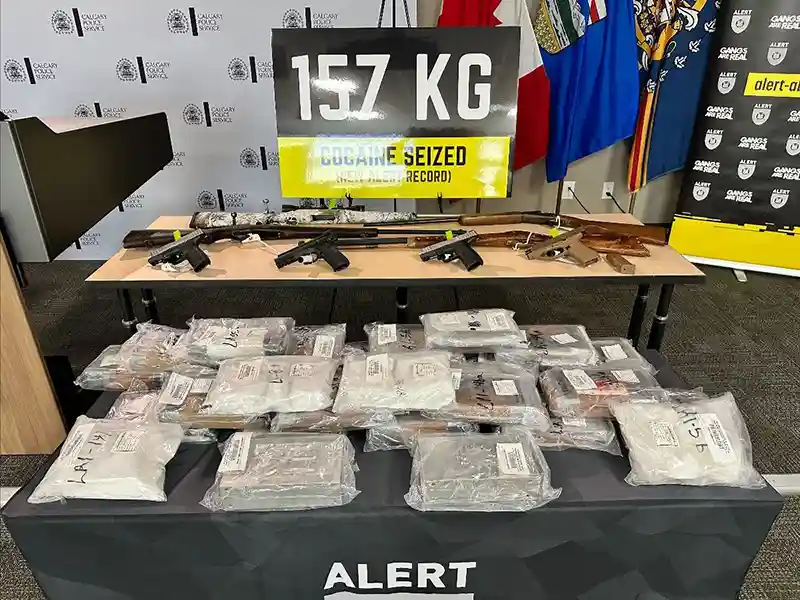
The operation began in May 2023 and uncovered an organized crime group trafficking drugs between Canada and the United States. Police seized 157 kilograms of cocaine with an estimated street value of over $15 million. The cocaine tested at 96 to 98 per cent purity, marking ALERT’s largest cocaine seizure.

Investigators also seized 15 firearms, nearly one million dollars in cash and seven vehicles equipped with hidden compartments for drug smuggling operations.

The crime group allegedly procured cocaine from Mexican cartels and imported it into Canada. They then transported the drugs across the country using vehicles with sophisticated hidden compartments.

In March 2024, Manitoba’s Roving Traffic Unit seized 61 kilograms of cocaine from a hidden compartment near Richer, Man. Then, in October 2024, the DEA seized 96 kilograms of cocaine from a Houston home identified through ALERT’s investigation.

Jack Kasjaniuk, 35, of Edmonton was arrested in Houston and charged with possession with intent to distribute. He pleaded guilty and received a 135-month federal prison sentence on Sept. 8.

Over 450 investigators and civilian staff participated in the investigation. They executed 15 search warrants across Canada, targeting homes in Calgary, Edmonton, Spruce Grove and the Toronto area.

Five men face a total of 31 criminal charges related to organized crime, conspiracy, money laundering and drug offences:

Reza Muhammad, 26, of Calgary; Jordan Plamondon, 40, of Spruce Grove; Ji Hwan Kim, 34, of Calgary; Allan Leung, 33, of Edmonton; and James Morrissette, 33, of Edmonton.

All suspects have been released from custody for court appearances scheduled between Sept. 26 and Oct. 3, in Calgary.

The investigation involved multiple agencies including Calgary and Edmonton police services, various RCMP units, Canada Border Services Agency and the DEA.


Additional cocaine packages and assault rifles seized during Project Cerberus drug investigation

More evidence from Project Cerberus including cocaine packages and assault-style weapons seized during the investigation.

ALERT displays 157 kilograms of seized cocaine packages and firearms from Project Cerberus investigation

Evidence from Project Cerberus shows 157 kilograms of cocaine and firearms seized in Alberta’s largest cocaine bust.


Read More from Alberta RCMP

Missing persons, crime, accidents, fire, death investigations and more.

RCMP Crime Map

View approximate locations of thefts, break and enters, missing persons and high-crime areas in Alberta here.

If you see a crime in progress or need police assistance in an emergency, call 911.

Anonymous reporting through Crime Stoppers and cash rewards

Crime Stoppers allows tip sharing without disclosing personal information. An ID number and password are provided to follow up on tip status or add details.

Cash rewards up to $2,000 may be available for tips leading to an arrest. Higher payouts apply to serious crimes like murder, sexual assault, drug and weapon seizures, and human trafficking.

Call in your tip: 1-800-222-8477 Submit tip online

Online crime reporting (under $5,000)

If you are the victim of property crime such as theft or vandalism under $5,000, online reporting is available 24/7.

Contact your local RCMP or Crime Stoppers with information about illegal activity.

Alberta | AB, Alberta Law Enforcement Response Teams | ALERT, Calgary – Alberta, Canada Border Services Agency | CBSA, Crime, Edmonton – Alberta, Manitoba, Ontario, Richer – Manitoba, Spruce Grove – Alberta, Toronto – Ontario

A person uses a blood glucose meter to check their blood sugar, holding a test strip to a finger with a drop of blood. Lancets and extra test strips are on a blue surface.

Health coalitions call on Liberals to fulfill pharmacare promises

Health coalitions across Canada call on the federal Liberal government to fulfill its pharmacare promises as the party’s caucus prepares to meet in Edmonton next week.

Ten provincial health coalitions issued a joint statement Thursday expressing concern that progress on national pharmacare has stalled since the spring federal election. The groups note that no new agreements have been signed with provincial or territorial governments despite campaign promises to continue implementing the program.

“The federal Liberal caucus is meeting for their pre-session retreat in Edmonton next week,” the statement reads. “Before they gather, we want to remind them that during the recent federal election they repeatedly promised continued action on implementing Pharmacare.”

The coalitions argue that many Canadians voted for the Liberals based on pharmacare commitments and expect those promises to be fulfilled. They point to growing anxiety over rising living costs, including potential impacts from new tariffs on jobs, health benefits and drug costs.

National pharmacare legislation became law earlier this year, establishing a framework for the program. Four jurisdictions have signed agreements to implement it so far, providing access to contraceptives and diabetes medications and devices.

The health advocates want the Liberal government to ensure all Canadians in every province and territory have equal access to these medications. They describe anything less than a clear commitment to implementing national pharmacare as “simply unacceptable.”

The joint statement comes from health coalitions in British Columbia, Manitoba, Ontario, New Brunswick, Nova Scotia, Prince Edward Island, Saskatchewan, Alberta’s Friends of Medicare, the Canadian Health Coalition and Quebec’s Coalition solidarité santé.

The federal government has faced pressure to expand pharmacare coverage while managing competing fiscal priorities and negotiations with provinces over healthcare funding.

Alberta | AB, British Columbia, Health, Health Care, Labrador and Newfoundland, Manitoba, New Brunswick, Northwest Territories, Nova Scotia, Nunavut, Ontario, Pharmacare, Politics, Prince Edward Island, Quebec, Saskatchewan, Yukon

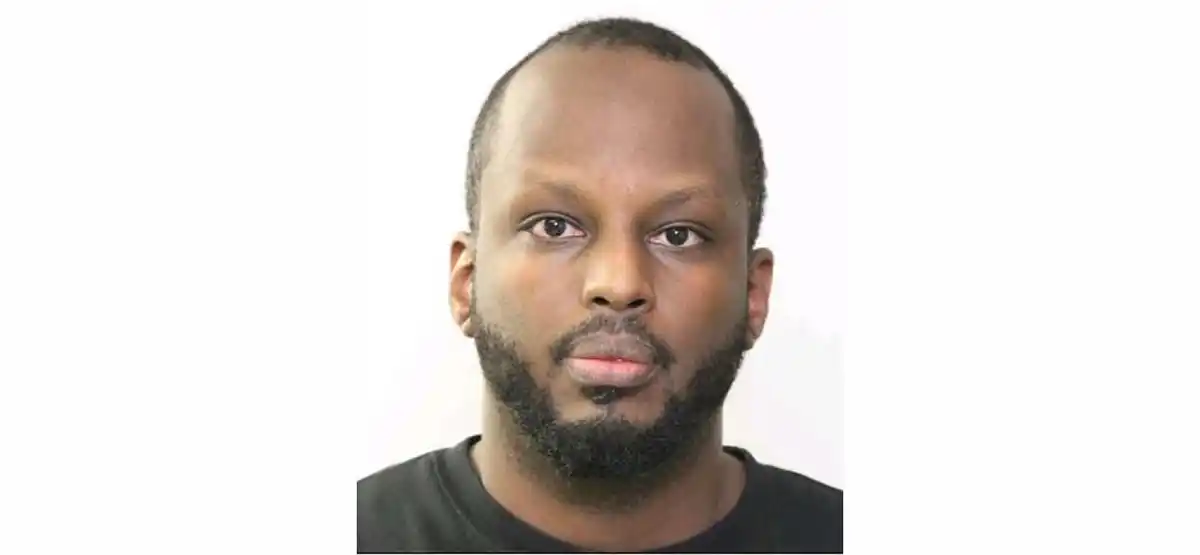
Christian Nyabirungu, 35-year-old murder suspect with black hair and beard in police mugshot photo

Alberta RCMP seek Christian Nyabirungu in 2018 Strathcona murder

Alberta RCMP Major Crimes Unit continue seeking public assistance to locate a man wanted on a Canada-wide warrant in connection with a 2018 murder in Strathcona County.

Christian Nyabirungu, 35, is wanted for first-degree murder, kidnapping and aggravated assault in relation to the Sept. 13, 2018, murder of Aldane Mesquita.

Nyabirungu may have changed his appearance but is described as having black skin, six feet two inches tall, weighing 240 pounds with black hair and brown eyes.

He has ties to Edmonton, North Battleford, Sask., Toronto, Ont., and has family in Montreal, Que.

Nyabirungu is considered dangerous and should not be approached by the public.

Seven people have been charged in connection with Mesquita’s murder. In March 2019, police charged Omar Abdirizak Omar, 33, Clement Fofie, 34, Roger Rurangwa, 31, and Mohammed Jawara, 29, all of Edmonton, with various combinations of first-degree murder, kidnapping and aggravated assault. Two additional men, Tyson Richard Clark, 30, and Jean Leon Musoni, 30, were also later charged with first-degree murder, kidnapping and aggravated assault.

Anyone who sees Nyabirungu or has information about his whereabouts should not approach him but call Strathcona County RCMP at 780-467-7741 or local police.

Those wishing to remain anonymous can contact Crime Stoppers at 1-800-222-8477 (TIPS) or online at www.tipsubmit.com.


Read More from Alberta RCMP

Missing persons, crime, accidents, fire, death investigations and more.

RCMP Crime Map

View approximate locations of thefts, break and enters, missing persons and high-crime areas in Alberta here.

If you see a crime in progress or need police assistance in an emergency, call 911.

Anonymous reporting through Crime Stoppers and cash rewards

Crime Stoppers allows tip sharing without disclosing personal information. An ID number and password are provided to follow up on tip status or add details.

Cash rewards up to $2,000 may be available for tips leading to an arrest. Higher payouts apply to serious crimes like murder, sexual assault, drug and weapon seizures, and human trafficking.

Call in your tip: 1-800-222-8477 Submit tip online

Online crime reporting (under $5,000)

If you are the victim of property crime such as theft or vandalism under $5,000, online reporting is available 24/7.

Contact your local RCMP or Crime Stoppers with information about illegal activity.

Alberta | AB, Crime, Edmonton – Alberta, Montreal – Quebec, North Battleford – Saskatchewan, Strathcona County – Alberta, Toronto – Ontario, Wanted Persons

A rolled-up newspaper with the headline "Economics" lies on a white surface next to a pair of eyeglasses and a white coffee cup.

Think tank says Canada needs new economic model beyond tariff concerns

A new report from Canada’s C.D. Howe Institute warns that U.S. tariffs have exposed deeper economic weaknesses that have been undermining the country for years.

The report, titled “Shaken by Tariffs, Still Weak from Within: Canada Needs a New Economic and Fiscal Model,” argues that Canada’s economic struggles go far beyond trade disputes. Author Don Drummond, a fellow at the institute and Queen’s University, points to sluggish productivity growth, mounting public debt and a tax system that discourages investment as fundamental problems.

Canada’s GDP per capita has fallen from above the OECD average to merely matching it, and projections show the country will have the weakest per-capita growth among developed nations through 2060. Business investment in machinery, equipment and intellectual property lags significantly behind U.S. levels, while research and development remains weak.

The fiscal picture adds another layer of concern. Both federal and provincial governments carry heavy debt loads, and Canada’s tax structure relies too heavily on income and profit taxes rather than consumption taxes that economists consider less harmful to growth.

Drummond argues that Prime Minister Mark Carney’s promised economic transformation will struggle without addressing these underlying issues. Plans to boost domestic production, develop Canadian expertise and expand into new markets will falter unless productivity and competitiveness improve and internal trade barriers disappear.

“Canada faces a crisis emanating from the US tariff threat – but it should not distract us from the deeper, longer-standing weaknesses that continue to undermine our economy,” Drummond says. The country must diversify and build resilience while tackling “the baggage we have carried for a long time.”

The report comes as Canada grapples with uncertainty over its trade relationship with the United States, which remains its largest trading partner. While tariffs grab headlines, the institute suggests the real challenge lies in fixing structural problems that have been building for decades.

The C.D. Howe Institute describes itself as Canada’s most influential think tank, focusing on economically sound public policy research.


Alberta | AB, Economics, General Interest, Tariffs