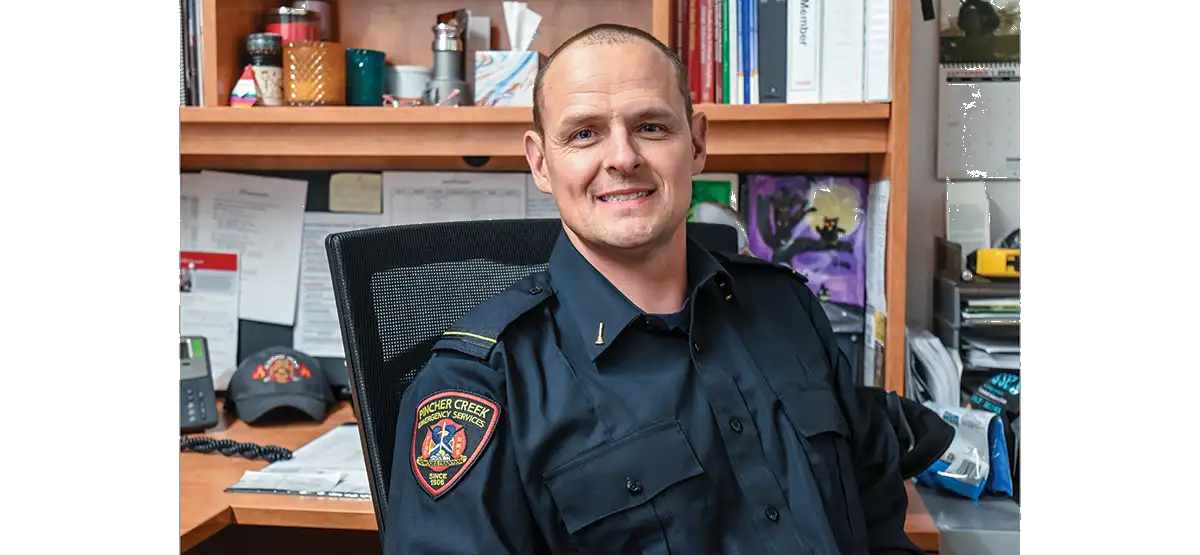
Profile: Pat Neumann

Graphic with the text "Municipal News from the MD of Pincher Creek" on the left side, featuring a stylized image of people seated around a meeting table on the right.

MD brings back formal fire guardian appointments

Eighteen people in the Municipal District of Pincher Creek now have the authority to issue fire permits and enforce burning restrictions after council formally appointed the district’s full slate of fire guardians for the first time in several years.

Council approved 17 appointments at its Sept. 9 regular meeting, with community peace officer Robyn Potter confirmed separately at the Aug. 25 meeting. All appointments are retroactive to April 1, 2026.

The appointments are made under Alberta’s Forest and Prairie Protection Act, which establishes the province’s framework for wildfire protection, fire control and burning restrictions. The act sets out the fire season, allows for cost recovery and fire control orders, and outlines the responsibilities of forest officers and fire guardians.

It requires the council of a rural municipality to appoint, each year in time for the start of fire season, enough fire guardians to enforce the act within the municipality’s boundaries, excluding any portion that falls within a forest protection area. Those guardians may, at their discretion, issue fire permits for land outside that area.

Pincher Creek’s fire chief, Pat Neumann, says the role itself has not changed, and the appointments largely formalize responsibilities his department has carried out for years.

“We issue debris burn permits to allow people to burn and have firepits within the town and the MD of Pincher Creek,” Neumann says. “It’s a council appointment that lays out who has responsibility to not only issue permits, but also enforce any restrictive actions based on those permits.”

MD administration noted the appointments had lapsed for a couple of years. Neumann says that was tied to changes made to the Forest and Prairie Protection Act about two years ago.

“Part of the MD lies within what we call the forest protection area,” he says. “It’s not necessary to have somebody appointed to that because we’re no longer issuing permits within that forest protection area.”

Get Stuff’d meat and seafood shop sign, located at 214 13th St. in Fort Macleod, open Thursday through Saturday from 12 noon to 6 p.m., phone 368-996-1968, follow us on Facebook at Get Stuff’d.

“It doesn’t change anything for landowners, it doesn’t change how the permits work, it doesn’t change the legislation and the fines and the necessity to have permits,” he says. “It just adds one more step to specifically identify who issues them within an organization.”

Neumann says he raised the issue with his commission board and decided the appointments were worth renewing even though they were no longer strictly required.

Those approved alongside Potter include officers and administrative staff within the fire department: Mysti Ayers, Nichole Boissoneault, Lynn Brasnett, Sariah Brasnett, Ian Campbell, Jason Carney, Richard Claude, Kathryn Feist, Jennifer Fisher-Sundberg, Jordan Gervais, Tammy Jack, Anne Molnar, Patrick Neumann, Iris Reed, Lynn Roberts, William Thorpe and Michael Whittington. Appointment letters are to be signed by the reeve.

Potter’s appointment was handled separately because she was new to her position and was appointed before the annual slate came to council, says MD executive assistant Jessica McClelland.

Potter’s community peace officer designation also requires the fire guardian appointment for enforcement purposes. Next year her name will be included with the others.

“The role is primarily focused on wildfire prevention and compliance with the Forest and Prairie Protection Act and its regulations,” Potter says.

She also educates residents and landowners about safe burning practices without duplicating existing services.

“It is important to understand that a fire guardian is not replacing the local fire department or Alberta Wildfire. The various agencies have different roles and authorities, and the intention is to work together to prevent fires before they become emergencies,” Potter says.

Job ad for “Shootin’ the Breeze” seeks part-time and full-time staff for photography, writing, and reporting; contact publisher@shootinthebreeze.ca. Background shows printed news text and a hand holding a voice recorder.

She has not issued any tickets for fire-related offences since her appointment. Her approach will be education and voluntary compliance first, with enforcement available when legislation is deliberately or repeatedly disregarded.

Potter will also work with the local fire department and other fire guardians to provide residents with consistent information.

What it means for landowners

Any open fire within the town or the MD requires a permit, and permit holders must follow the conditions listed on their permits, which can include limits on wind speed, weather conditions and the materials burned.

“There is no unpermitted burning allowed in the town or the MD, whether it be a recreational fire pit or a debris burn,” Neumann says.

Potter says residents should first determine whether a permit is required, check current fire danger and review any restrictions or bans before burning.

“A fire permit is not simply permission to light a fire, it’s part of a broader wildfire prevention system,” she says. “The purpose is to make sure burns are conducted safely and that authorities know where approved burning is taking place.”

Conditions can change quickly and it’s up to permit holders to stay current on restrictions, even after a permit is issued. One issued today does not necessarily mean a resident can burn several days later if conditions have changed.

“People need to pay attention and watch albertafirebans.ca for the most up-to-date restrictions and possible bans that may be in place before they light a fire,” Neumann says.

Event poster for a Secondhand Dreamcar concert at the Empress Theatre on November 20, 2026, at 7:30 PM, featuring a photo of the band members.

Landowners are also responsible for monitoring a fire until it is completely out, and for any costs if a controlled burn escapes and the fire department has to respond.

“The onus is on the landowner to make sure they’re following safe burning practices,” he says.

The fire department reviews proposed burns before issuing permits. For debris burns, applicants provide photographs showing all sides of the proposed burn area. For larger burns, fire department personnel may visit the site to assess the conditions.

Residents with questions can contact Pincher Creek Emergency Services. Permits can be obtained online through the PCES website or in person at the fire hall.

Fire Bans, Fire Guardians, Fire Permits, Forest and Prairie Protection Act, Wildfire Prevention

A blue sign reads "Gate Number RGE RD 1-3" in white text, standing in a grassy field with wind turbines and a blue sky in the background.

Range Road 13, not one dash three

I grew up in small-town Saskatchewan in a community much like Pincher Creek. Giving directions often centred on local landmarks and many descriptions led us to the same place. If you got lost along the way, there was always someone to help you out.

We lived on First Street West, but might direct someone by telling them it was the old Koffski house with the giant trees in front, down the street from Kitely Park.

If we knew they were coming from a different direction, the description might include Busy Bee Daycare instead.

Rural directions were similar and I don’t recall much for signage in my early driving years.

To visit my friend Kim, I turned left just after Relland Sales (an abandoned auto shop), then left again two roads past the Moose Plains Hall. I knew I was heading out of Nipawin toward Carrot River, but Highway 55 was never a reference in our directions.

Somehow, we always found our way, whether in town or in the countryside.

Moving to Alberta as an adult, I learned about range and township roads, and appreciated the clear signage.

The biggest change was moving to an acreage and remembering two addresses — the gate and road numbers, and the legal land description. For days with bad recall, I could pull the information up from my phone memos or look at the marked map on the fridge.

Event flyer for The Hometown Holiday Market on November 14, 2026, at the Heritage Inn in Pincher Creek, featuring a list of vendors and event details set against a snowy holiday background.

My late husband Jim and I lived on Range Road 1-3. The sign had a dash and people said it with the dash — one dash three.

Several times during Jim’s illness I found myself frantically calling for an ambulance.

During a stressful time, the last thing anyone wants is to argue with a dispatcher about your address, but that’s exactly what happened more than once.

The first dispatcher made me doubt myself, so I ran to the kitchen to be sure. There it was marked on the fridge map — Range Road one DASH three. Still, he insisted my call was coming from Range Road 13.

I stressed that both the highway and gate signs contained dashes. I told him to please send the ambulance east from Pincher Creek on Highway 507 and gave landmarks for good measure.

I was terrified the ambulance would end up in the wrong place and the address discrepancy added a layer of fear to what was already a scary situation.

After two similar incidents, I chatted with Emergency Services Chief Pat Neumann, sharing both my concern and frustration. This is how I learned about the differences in road numbering here compared with other municipalities.

I no longer argued when the dispatcher said 13 back if I said the dash and, thankfully, the ambulance always arrived.

Christmas in the Country Market flyer for Saturday, November 7, from 10 a.m. to 5 p.m. at Twin Butte Community Hall, featuring local vendors, food, and ear piercings.

If you haven’t yet read “Drop the dash: Rural address format matters for faster 911 response,” please do.

Drop the dash. It’s simple, but can be a hard habit to break.

This is important for rural residents, but also for town folks. You could be visiting a friend’s ranch or camping in the backcountry and need to make an emergency call.

In a situation where seconds can matter, getting the address right is critical.

Resist the urge to give local landmarks that can confuse dispatchers, and trust our emergency services teams to get to you as quickly as they can.

911, Emergency Response, Rural Addressing

An Alberta range road sign.

Drop the dash: Rural address format matters for faster 911 response

A simple change in how rural residents describe their address during a 911 call could help emergency crews reach them faster.

Pincher Creek Emergency Services asks MD of Pincher Creek residents to change how they report rural addresses when speaking with dispatchers. Specifically, callers should omit the dash when stating range and township road numbers.

Emergency services Chief Pat Neumann says the change will help dispatch systems interpret addresses accurately and reduce confusion during emergency calls.

The issue stems from how different municipalities format rural addresses.

Neumann says the MD of Pincher Creek uses the numbering format originally used across the province, which includes a dash — for example, Range Road 28-1. Other municipalities have dropped the dash from their systems, calling the same location Range Road 281.

That inconsistency, he says, has led to mix-ups when dispatchers outside the region have been confused by the dash.

Fire and rescue calls are dispatched out of Lethbridge, while ambulance calls are routed through Calgary. If that centre is at capacity, calls can be bumped to Edmonton or, in some cases, as far away as Grande Prairie. That distance compounds the problem, since dispatchers far from the region may not recognize local landmarks.

Dispatchers unfamiliar with local geography rely on how clearly and consistently an address is stated. Neumann says residents should identify their location as the MD of Pincher Creek rather than using informal regional descriptions such as north of Cowley or other local references that won’t be recognized by dispatchers elsewhere in the province.

An older couple smiles while leaning on a wooden railing outdoors, above text describing their $879 profit share from Vision Credit Union and a website link.

He says most residents shouldn’t run into trouble as long as their phone number is registered with the 911 system, since that information is automatically shared with dispatch. But knowing the correct address format is an important backup, particularly in areas with unreliable cell service or when a call is placed from a different phone.

“The biggest thing is to make sure you know where you live,” Neumann says. “Either know your legal land description or know your proper gate number and your township or range road number.”

Rural gate numbers that serve more than one residence are another, less obvious, issue. Unlike a home in town, where a civic address corresponds to a single house, a rural gate number can lead to two or three separate residences on the same property.

Neumann says EMS has arrived to find as many as four houses sharing a gate on the same property on numerous occasions. During an emergency, when every minute counts, being clear with the 911 dispatcher can make a difference.

Giving clear identifiers, like the house with the red roof or the one with a new Ford pickup parked in front, will assist emergency responders.

While dropping the dash is a simple change, Neumann says it can make a meaningful difference in how quickly help arrives, particularly in a rural municipality where addresses are often the only tool dispatchers have to locate a caller.

911, Emergency Response, Municipal Services, Rural Addressing, Rural Emergency Services

The Pincher Creek Emergency Services logo and Community Connect logo next to a notebook that says "Emergency Plan"

Community Connect gives Pincher Creek first responders a head start

A new self-registration program launched by Pincher Creek Emergency Services is giving residents and business owners a way to help first responders better prepare for emergencies before they arrive.

The free online platform, called Community Connect, allows people to securely share important information about their homes and businesses. Users can voluntarily provide details such as mobility needs, pets, access codes, emergency contacts and other information that could help firefighters and EMS respond more effectively when every second counts.

Emergency services Chief Pat Neumann says the information automatically appears to responders while they are en route to a registered address after a 911 call is dispatched, giving them details they would otherwise not have before arriving on scene.

“It’s like a pre-plan, basically, for residents and businesses,” Neumann says.

The program was soft-launched in April and emergency services is testing the system. Although a broader public launch is planned during the grand opening of the new Pincher Creek fire hall in September, people can register immediately.

“The more people we get on, the bigger the advantage for us,” he says.

How it works

When a 911 call is made, dispatch captures the caller’s address, which is cross-referenced with the Community Connect database. If the address has a registered profile, the information automatically appears on responders’ devices.

The platform allows residential users to record details about their property type, whether the home has fire sprinklers and where the family plans to meet during an emergency. They can also flag mobility or other functional needs of household members, list emergency contacts and upload photos and descriptions of their pets. Alternate entrances and door access codes can also be securely shared.

Two men in high-visibility work shirts stand in a construction site above text that reads “Daventry Development’s share: $18,271,” followed by a summary of their business, the URL whatsyourshare.ca, and the Vision Credit Union logo.

Business owners can upload emergency plans and procedures, identify staff members with mobility needs, note on-site hazardous materials and provide key access and utility details. They can also enter contact information so they receive a text alert if emergency services are called to their property.

People with separate home and business addresses can create two profiles, one using a personal email and one using a work email.

Those who cannot register themselves can have a family member register on their behalf, or contact the fire department to have an account created for them.

Community Connect also allows users to update their information if they move or if details about their household change. The system sends periodic reminders encouraging users to review and update their profiles to keep information current.

Privacy and security

Neumann acknowledges residents may have concerns about how their personal information is protected but says safeguards are built into the system.

The data is stored entirely within Canada and is protected using 256-bit encryption. The information cannot be accessed by firefighters or EMS personnel unless they are responding to an emergency at the registered address.

“It’s protected at the same level as banking information,” he says. “I can’t just log on a Friday afternoon, cruise through there and see who’s got what in their house.”

Residents with privacy questions are encouraged to contact the emergency services department directly.

Ace of spades card on ad for Chase the Ace at the Pincher Creek Legion

No cost, no incident behind it

The program is free. There are no registration fees, monthly charges or upfront costs. Community Connect is an add-on feature of the software Pincher Creek Emergency Services adopted about a year ago for scheduling, inventory tracking and call management.

Neumann says no specific emergency prompted the launch. The department decided to roll it out after hearing from fire department partners across the province who reported strong results.

With the program still in its early stages, there are no confirmed cases yet where a Community Connect profile directly shaped a response in Pincher Creek.

However, Neumann says the system has already demonstrated the value of providing responders with more information before arriving at an emergency scene. He expects its benefits to grow as more residents and businesses register.

What the department wants

Neumann says the department hopes the program will become widely used.

“Anybody that we can get on, we’d love for them to get on, because it makes our job easier, and it means that we can provide you a better service,” he says.

About 100 properties are registered so far and Neumann expects participation to grow as awareness increases.

The department plans to promote the program through social media, a fall advertising campaign and word of mouth. The program was also discussed at this year’s trade fair and will be featured again next year.

A woman sorts food items into cardboard boxes at a food bank, with text above advertising Vision Credit Union’s Helping Hand Grants, which offer up to $10,000 for rural Alberta non-profits, with a QR code and an application deadline of January 17, 2027.

“We’ve got it out, all our councillors are using it now,” he says. “So, we’re hoping for word of mouth.”

Residents and business owners can register online at communityconnect.io/info/ab-pinchercreek.

Anyone with questions about the program can contact Pincher Creek Emergency Services at 403-627-5333 or email team@communityconnect.io.

Community Connect, Emergency Preparedness, First Responders, Public Safety

A blue cup of cappuccino with heart-shaped latte art sits on a wooden table next to an open, blank spiral notebook and a black pen.

MD hears from residents at year’s first Coffee With Council in Twin Butte

An open floor and a full room set the tone for the first Coffee With Council session of 2026, as Division 1 residents gathered at Twin Butte Hall on March 17 to question Municipal District of Pincher Creek officials on issues affecting the region.

From infrastructure and agriculture to proposed industrial projects, the session underscored the role of informal public meetings in shaping local decision-making.

Reeve Rick Lemire, deputy reeve Tony Bruder, along with councillors Dave Cox, Jim Welsch and John MacGarva, and municipal administration staff were present at the session. Fire Chief Pat Neumann and members of Rural Crime Watch were also present.

Coffee With Council is an informal, open-house-style gathering where residents can speak directly with councillors, municipal administration, law enforcement and community safety groups about local issues.

The MD organizes these sessions throughout the year in different divisions. About 43 residents and staff attended the Twin Butte event.

Bruder opened the session, encouraging respectful discussion before inviting questions from the floor.

Early questions focused on infrastructure, including long-anticipated power line upgrades in the Twin Butte area. Council indicated it has not received any timeline from Fortis regarding the work.

Citing interest in measuring traffic volumes at the church site, the St. Henry’s Historical Society asked the municipality to provide a traffic counter. The municipality confirmed a portable unit would be made available, with public works arranging delivery.

Drought and water access emerged as other concerns. Residents expressed appreciation for recent municipal assistance with culvert installation and road signage to support water pumping.

Council said it has raised agricultural water challenges with both the provincial environment minister and the federal government, seeking funding and long-term solutions.

Discussion around water continued in relation to broader agricultural planning and dam management. The municipality is exploring options for raw water storage and livestock hauling, while also assessing costs and feasibility.

With all five municipal dam reservoirs reported to be low or empty, council is considering the formation of user groups to ensure consistent management and input from all affected landowners, particularly those downstream.

Concerns were raised about changes in how provincial water allocation orders are communicated, with residents now expected to monitor updates online.

Rural crime and community safety were also highlighted, with members of the reorganized Rural Crime Watch providing an update. The group is in the process of re-establishing operations, recruiting new members and seeking representatives from several divisions.

A meeting is scheduled for April 15 at the municipal office and residents are encouraged to connect with organizers if they have not yet received signage or wish to participate.

Questions around the proposed Captus project generated significant discussion. Council explained the company owns the former Shell Gulf plant site and is exploring options to generate power for on-site use, rather than feeding into the grid due to high transmission costs.

No formal applications have been submitted for a data centre or related development, and previous proposals have not proceeded. Residents were told that any future project would trigger regulatory review, including potential land-use bylaw changes and a public hearing process.

Concerns about water use tied to industrial development were addressed, with officials noting that any operations would rely on deep saline sources rather than surface water. Questions about cooling technology were deferred to potential project partners, with council adding that newer systems are becoming more efficient and require less water.

Emergency services updates were provided by Chief Pat Neumann, including details on the upcoming launch of the Community Connect program, expected in late April. The voluntary system will allow residents to share important household information with emergency responders to improve response effectiveness.

Neumann also discussed ongoing challenges with location accuracy during emergency calls, urging residents to be familiar with their legal land descriptions and to clearly identify their location within the MD when contacting dispatch.

An update on the fire hall renovation indicated crews are expected to move into the new facility in June, with a public open house planned. The upgraded station will support 24-hour ambulance service under contract with Alberta Health Services, with response targets set at 90 seconds.

The existing building is currently listed for sale at $729,000 and has interest.

Tourism pressures were another point of concern, with council noting increased traffic volumes and high travel speeds along Highway 6. While visitation to nearby attractions continues to rise, officials said the municipality is not adequately resourced to manage the impacts, including road damage and waste.

Council has raised these concerns with provincial ministers, advocating for more controlled tourism.

Residents asked about a proposed campground development, though council confirmed no applications have been received by either the municipality or provincial public lands. Officials emphasized that any future proposal would require rezoning and public notification, and encouraged residents to engage with councillors and planning staff to better understand the process.

Additional discussion touched on road maintenance, with concerns raised about dust from current gravel specifications, and on funding challenges, including reduced provincial infrastructure support and rising policing costs expected over the coming years.

Bylaw-related questions were also addressed, including clarification around proposed updates to traffic and community standards regulations. Officials stressed that enforcement remains complaint-driven and focused on education, with tools such as licences of occupation intended to address disputes and promote responsible land use.


Strong local journalism matters to Canadian communities

This article was reported and written by Shootin’ the Breeze’s Local Journalism Initiative reporter. 

The Local Journalism Initiative is a federally funded program that supports original public-interest journalism in smaller or underserved communities across Canada. Content produced through the initiative is editorially independent and may be shared by other Canadian media outlets.

Stories like this are reported to keep readers informed and connected — and to reflect real Canadian life.

Alberta | AB, Municipal Councils | Governments, water

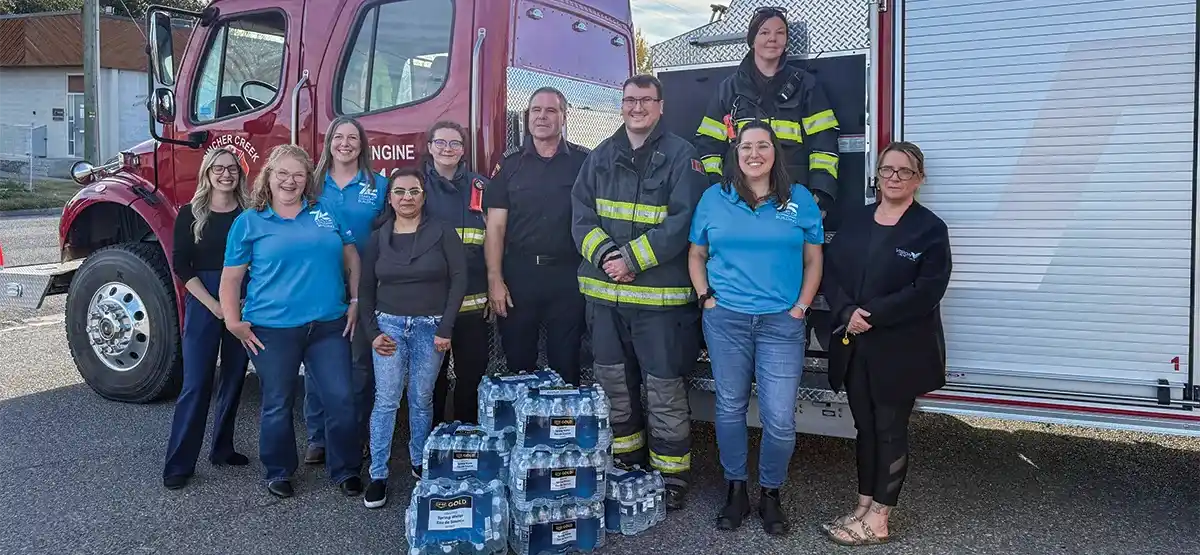
Group of Vision Credit Union staff and emergency services members standing with cases of water bottles

Vision Credit Union donates water to emergency services

Vision Credit Union’s Pincher Creek branch donated 10 cases of water to Pincher Creek Emergency Services during Fire Prevention Week, which ran Oct. 6 to 12.

The donation is part of a provincewide initiative by VCU branches to support local emergency service crews.

“Vision wants to do our part to support our local emergency crews, and we know that having quick access to drinking water helps them do what they do best,” says Wendy Desjarlais, agricultural and commercial business account manager with the local VCU branch.

Becky Maier, branch manager trainee at VCU, says while the donation mandate was followed across Alberta, the Pincher Creek team was eager to carry it out locally. 

“It’s the first time we’ve actually done something like this for Fire Prevention Week itself, but Vision Credit Union is very big on supporting our local businesses without hesitation, including Pincher Creek Emergency Services, so this isn’t the first time that we’ve supported them,” she says.

In 2023, through VCU’s Helping Hands grant, the local branch provided $10,000 in funding to the Beaver Mines Fire Department for the purchase of a Zoll AutoPulse device.

That same year, VCU also provided $10,000 in funding through Helping Hands to the Southwest Alberta Regional Search and Rescue Society for 20 new radios.

“It’s actually one of our main focuses within our branch. We want to be involved within our community,” says Maier. 

Chief Pat Neumann says the water bottles are practical for his crew while on the job.

“For us, it’s fantastic, because that’s one thing that we carry in all our vehicles. It’s super handy,” he says. “In a lot of cases, we don’t have access to fresh drinking water in the conditions that we’re working in.” 

Hydration is critical for emergency crews, especially during wildfire or structure fire responses that can span hours.

“Making sure that we’ve got enough to keep our staff hydrated and able to continue their job is critically important for everything that we do,” Neumann says.

Community gestures like this have a lasting impact on crew morale and Neumann says PCES has relied on community support through donations and supplies like water and blankets since the department’s founding in 1906. 

“This isn’t the first time that [VCU] has donated to our organization, and we’re very thankful for community-minded organizations such as the credit union and other organizations in town that support us like this,” he says.

Those interested in making a donation to Pincher Creek Emergency Services can call 403-627-5333 or email info@pincherfire.com.


Alberta | AB, Alberta business, Beaver Mines – Alberta, Beaver Mines Fire Department, Becky Maier – Pincher Creek, Fire Prevention | Emergency Preparedness, Pincher Creek Business, Southwest Alberta Emergency Services, Vision Credit Union – Pincher Creek, Vision Credit Union | VCU – Pincher Creek, Wendy Desjarlais – Pincher Creek
A blue puzzle piece with the words "JOIN US" written on it is about to be placed into a nearly completed white puzzle.

PCES invites residents to join community advisory committee

Pincher Creek Emergency Services is inviting residents of the town and MD of Pincher Creek and Piikani Nation to take an active role in shaping plans, policies and initiatives through a newly formed community advisory committee. 

Although in its infancy stages, the committee is intended to bring a diverse mix of local voices into the fold to help shape the planning and policy side of local emergency services, while providing crews with an outside perspective.

The committee will meet quarterly to discuss a variety of topics, like emergency response priorities, public safety initiatives, and how the department can best meet the needs of a growing and increasingly diverse population. Participants will have the opportunity to not only review plans but also provide input on new ideas and share feedback with the public.

According to Chief Pat Neumann, the new committee is intended to ensure that the department remains responsive to and representative of all groups of people it serves. 

“We’re becoming quite a diverse community, so making sure that we’re meeting the needs of everybody within our community and understanding what their needs are is something that could fall into policy design,” he says.

While provincial regulations dictate certain operational standards that must be adhered to, there’s room to adapt certain local policies and procedures based on local insights from those beyond the fire hall’s walls.

“There’s this perception that we come, we do our job, we leave, and that’s it, but we’re no different than any other business in town — we want to make sure that we’re doing right by the people of our community,” Neumann explains.

The idea for the committee stems from a recent review of PCES’s organizational practices, in which community input and engagement were marked as an area for improvement. 

This new approach aims to replace one-off consultations and open houses to gather feedback with more consistent and meaningful input from interested residents to share their perspective.

While topics have yet to be set in stone, the committee is expected to initially focus on emergency medical services and will likely expand into fire and rescue discussions in the future. 

To get the most out of this new committee, the department is looking for applicants with a variety of backgrounds, particularly those with experience in community service, business or government. 

While a higher education is not a requirement, PCES is seeking professionals that wish to work collaboratively with first responders.

“We’re looking for people with a diverse background, people that want to be a part of the committee to help better the organization, not to pick a bone with us necessarily,” Neumann explains.

Members are expected to take a few hours ahead of the quarterly meetings to prepare, followed by a few hours to participate in the meetings themselves.

“It’s not a huge time commitment, but it does take initiative and genuine interest to help improve the service,” Neumann says.

Ultimately, PCES hopes that the committee will help create a stronger link between the public and first responders, leading to more transparent decision-making and a shared sense of ownership in local safety.

Residents of the town and MD of Pincher Creek, including Cowley, Lundbreck and Beaver Mines, as well as residents of Piikani Nation, are eligible to apply. Applications are due by Oct. 26, and can be completed online by visiting pincherfire.ca/commadvisory.  

Those seeking more information regarding the committee are encouraged to reach out to Deputy Chief Sariah Brasnett at sariah.brasnett@pincherfire.com or call 403-627-5333. 


Alberta | AB, Alberta Opportunities, Alberta Volunteers, Opportunities, Piikani Nation | Brocket – Alberta, Pincher Creek Opportunities, Pincher Creek Volunteers, Sariah Brasnett – Pincher Creek, Southwest Alberta Emergency Services, Volunteers Wanted

Black-and-white photo of an old church building with a peaked roof, large central stained glass window, smaller side windows, bushes along the front, and a staircase on the right leading to the entrance.

Pincher Creek honours 1925 United Church cornerstone legacy

Members of Pincher Creek United Church are stepping back in time next week with a re-enactment of the cornerstone-laying ceremony that marked the beginnings of their church building a century ago. The commemoration, set for June 24, will begin with a parade and unfold as faithfully as possible to the original 1925 event.

Special guests include John and Pat Garden, grandchildren of Rev. G.H. Garden, the beloved minister who championed the creation of the new church; Pat Neumann, grandson of 1925 church council member Theadore Neumann; and representatives from the church council and Masons lodge.

Everyone is welcome to join the celebratory re-enactment, starting at 4 p.m. on June 24.

Other special projects include a cookbook of 100-year-old recipes and a photo restoration project. Community members are encouraged to contribute recipes and volunteer to work with the photos.

An anniversary dinner is planned for Oct. 26, in celebration of the 100th anniversary of the United Church of Canada and the 107th anniversary of the date the Presbyterian and Methodist churches in Pincher Creek united.

The 1925 parade started at the Masonic Hall, which was located on the west side of what’s now Bev McLachlin Drive, at the intersection before the hill. The centennial parade will be a short one that doesn’t involve street crossing, likely marching from the manse to the east side of the church at 4 p.m.

Based on a century-old article from the Lethbridge Herald, here’s a look back at a remarkable day in the life of the Pincher Creek community:

On June 24, 1925, the prairie wind carried more than just the summer heat. It lifted music and prayer, mixed with official ceremony, as a crowd gathered around the future home of Pincher Creek United Church. What they witnessed that day was more than the laying of stone and mortar — it was the making of history.

The town became the first in Canada to see the cornerstone laid for a church under the newly formed United Church of Canada, a moment sealed with solemnity, celebration and community pride.

A procession, including the Independent Order of Odd Fellows band, officers of the Grand Lodge of Alberta, members and officers of the Ancient Free and Accepted Masons, and Spitzie Lodge No. 6, marched from the Masonic Hall to the church construction site. Public schoolchildren lined the foundation, and the streets overflowed with residents eager to witness history.

As the band fell silent, Rol O. Allison, representing the building committee, welcomed the Masonic order. He honoured the pioneers who had laid the foundations — both spiritual and literal — of the old church, now outgrown.

“I feel confident,” Allison said, “that when the doors of the new church are opened, the edifice will be free of debt.”

Grand chaplain Rev. W.B. Merick of Macleod offered a prayer for harmony, love and enduring purpose. A scroll inscribed with the names of church, civic and national leaders was read aloud by acting grand secretary Theadore Paul Neumann and placed within the cornerstone, along with a phial of coins from the Dominion of Canada.

With the band playing, the stone was laid with great ceremony. 

Grand master S.Y. Taylor tested it with the plumb rule, level and square, before declaring it “well made, truly laid, well proved, true and trusty.”

Corn, wine and oil — emblems of plenty, joy and comfort — were poured on the stone while asking blessings on the structure, its builders and all who would gather within it.


Bro. Thomas Henry Hinton presented the building plans and received the ceremonial tools back from the grand master, who urged their wise use in raising a house of order and beauty. The crowd sang “How Firm a Foundation,” a hymn fitting for the moment.

In his oration, Taylor reflected on the Masonic tradition of laying public cornerstones, from cathedrals to civic buildings. Though not a religion, Masonry, he said, works hand-in-hand with faith and education to uplift humanity. He noted the order’s quiet benevolence, including over a million dollars dedicated to helping crippled children in North America, and wished the congregation enduring success.

William A. Fraser, speaking for the church, called the ceremony beautiful and moving, a double honour for Pincher Creek to host the first cornerstone laying of the United Church in Canada. He presented Taylor with a silver gavel as a token of thanks.

Mayor Harvey Bossenberry expressed civic pride in hosting the event.

High school principal John Stevenson reflected on the importance of giving youth a proper place for spiritual and communal life.

“The heritage the children are going to enter … the gym, baths, etc.,” he said, “will help young people’s work flourish in Pincher Creek.”

William A. Ross offered a short history of the local church, beginning with W.A. McKenzie, the first pastor, who later served during the Riel Rebellion. He honoured Rev. McPhail, whose memory would be preserved in the largest stained glass window in the new church, funded by the Captain McPhail chapter of the I.O.D.E. 


He also mentioned Rev. Aitchison, who inspired Mrs. Janet Swaine, a pioneer woman, to leave her estate to the church in support of youth initiatives. A memorial window would be placed in her honour.

Rev. John Harris Garden, the church’s pastor and driving force behind the new building, closed the ceremony. With visible emotion, he thanked the Masonic order and the crowd, noting the symbolic richness of the new United Church — a blending of traditions into something both rooted and new.

He deposited the records of the congregation, a membership roll of 187 names, a copy of the basis of union, and the act of Parliament that birthed the United Church of Canada, along with a note on the stone’s donation and a list of contributors.

“Love one another,” he reminded the crowd — a fitting cornerstone for a church, and a community.

As the band struck up the national anthem, voices lifted in unison across Pincher Creek. In stone and in spirit, the foundation had been laid.


Alberta | AB, Pincher Creek Churches, Pincher Creek United Church

From left, Alex Abdullah, Luke Barrios with TC Energy, Darrell Archibald with Pieridae Energy, Rick Czarny and Tom Judd proudly pose with a new cutter-spreader combi tool. Photo courtesy of Nichole Boissoneault

Cutter-spreader combination tool bolsters Beaver Mines fire station’s rescue capabilities

Pincher Creek Emergency Services has added a vital tool to its equipment arsenal over at Beaver Mines Fire Station, thanks to generous donations from Pieridae Energy and TC Energy amounting to $23,835. The new piece of equipment, a cutter-and-spreader combination tool, commonly referred to as a combi tool, is expected to improve the department’s ability to respond promptly to emergencies in remote areas like Beaver Mines.

“It provides us with an extra set of tools in one of our remote stations and puts another valuable resource in our hands for vehicle extrication,” says Chief Pat Neumann. “It doesn’t do any one job perfectly, but it does all of them adequately to help us achieve our goals in emergency situations.”

The first of its kind within PCES, the tool is easy to transport, cordless, and serves several functions, including popping open doors and cutting through car roofs, making it indispensable during vehicular accidents.


Also read | LDS drive collects over 4,000 pounds of food in Pincher Creek


It’s further beneficial to have this tool located at the Beaver Mines station, given its location. With the addition of the combi tool, first responders from Beaver Mines now have the ability to start extrications in emergency situations in a more timely manner before more specialized vehicles and equipment arrive. The time saved can be the difference between life and death in certain situations.

“It’s not just about saving time, it’s about giving our firefighters the tools they need to act quickly in critical moments,” Neumann says.

The purchase of the new combi tool was made possible thanks to the efforts of members of the fire department, who spearheaded the grant applications, and of course, Pieridae Energy and TC Energy.

Chief Neumann spoke highly of his colleagues’ efforts, and expressed deep gratitude for the support of Pieridae Energy and TC Energy, stressing how the contributions of these companies helps PCES better equip itself to serve the community.

While the core needs of PCES are covered largely by municipal funding, donations like those made by Pieridae and TC Energy are vital in securing specialized equipment such as the combi tool.

“Our goal is always to make our firefighters’ work easier and safer, and these grant funds make a big difference,” Neumann says. “We’ll continue applying for similar grants in the future to equip each station with the tools needed to handle emergencies effectively.”

According to Neumann, with the addition of the combi tool, PCES was able to donate spare extrication tools from Beaver Mines to the Cowley Fire Department in an act of support.

“We try to make sure we pass on whatever we can to try to help and support our fellow emergency services organizations,” he explains. “In this case, the old extrication tools that came out of Beaver Mines went to Cowley.”

This recent donation follows in the footsteps of other organizations keen on supporting emergency services in the area, including the donation of a pickup truck earlier in the year by Plains Midstream, which has been integrated into the department’s operations.

If you wish to make a donation to PCES, you can do so through the PCES brigades in Pincher Creek, Beaver Mines and Lundbreck. These funds are used to support the purchase of specialized equipment that municipal funding may not cover, contributing to the safety and well-being of those living or passing through the area.

Alberta | AB, alberta local news, Beaver Mines, Beaver Mines Fire Department, PCES, Pincher Creek News

TransAlta windmill on fire with a trail of black smoke near Cowley, Alberta.

Emergency crews respond swiftly to wind turbine fire near Cowley

On July 9, Pincher Creek Emergency Services was notified just after 6 p.m. of smoke, and eventually flames, coming from a TransAlta wind turbine along the Cowley Ridge.

Crews were sent out from the Pincher Creek and Lundbreck fire stations to contain the area around the turbine and ensure that any dropping debris or fire was stopped dead in its tracks.   

“We didn’t fight any fire in the turbine itself because, of course, that’s not safe,” says Chief Pat Neumann of PCES.

“We had crews on the scene for about three hours, basically maintaining the area around the turbine to make sure that any dropping debris or fire was stopped from extending outward from the turbine, and that’s about the extent of it.”

A huge shout-out to Pincher Creek Emergency Services for responding promptly to the hazard.


Alberta | AB, Cowley – Alberta, Emergency Services and Public Safety, Fire | Wildfire, TransAlta

Young cyclists gear up for a good summer as they learn the basics of bike safety from Pincher Creek’s bylaw, police and emergency service teams and Napi Friendship Association, at a Canyon School bike rodeo.

Summer bike safety with Pincher Creek fire chief

As cycling season rolls in, safety must be the top priority, especially for young cyclists. 

Wearing a helmet is No. 1, says Chief Pat Neumann of Pincher Creek Emergency Services. Helmets should be in good condition, well fitting and properly strapped. Impact, sun and other factors can degrade a helmet’s condition, rendering it less effective. 

Head injuries are common in bike accidents, since riders often fall from an awkward height onto a hard surface, and helmets help to prevent this.


“Proper footwear is another big one,” says Neumann, noting that flip-flops are not safe for biking and that riders should be sure to secure laces.

Bikes, skateboards and rollerblades should not be on sidewalks, and riders should be mindful of the rules of the road.

“We do see people get hit by bikes on sidewalks,” says Neumann. 

To ensure cyclist safety, both riders and motorists must be very aware of their surroundings and share the road with caution.


“It’s just a matter of making sure that you’re paying attention to the people around you,” says Neumann. 

Pincher Creek Emergency Services recently hosted a bike rodeo with Napi Friendship Association and Pincher Creek bylaw enforcement to ensure that kids were well equipped for summer riding. 

Some priorities for the session were reminding kids of rules of the road, practising paying attention to surroundings, making sure the bikes were in good and safe condition, and ensuring helmets fit properly.

“Pay attention and have a good summer,” says Neumann.


     | Read more Pincher Creek, Crowsnest Pass and area news here


Alberta | AB, Canyon School Bike Rodeo, Children/Youth, Napi Friendship Association, Public Safety

Councillor Sahra Nodge, left, spoke with residents about taxes and assessments.

Council connects with community at open house event

Pincher Creek council hosts open house, connecting with residents on top-of-mind issues

Pincher Creek town council hosted its first open house of the year on June 12. According to Mayor Don Anderberg, the town sought to connect with residents on a variety of topics by having each councillor speak to the public at a different station.

The event also highlighted the new Clean Energy Improvement Plan, launched roughly a month ago. This plan provides a low-interest loan to any resident looking to make improvements to their home to increase energy efficiency or sustainability.

This open house also launched a survey that allows residents to offer feedback on how the town communicates information. The survey can be found online at pinchercreek.ca/content.php?n=685 and is open until June 28.


Councillor Sahra Nodge, left, speaks with a resident. | Photo by Mia Parker


Councillor Sarah Nodge, left, spoke with residents about taxes and assessments, explaining how mill rates are calculated, the town’s revenue sources, and how that revenue is invested into the community.

Nodge says one recurring concern raised at her station was franchise fees, which are at a maximum in Pincher Creek.


Councillor David Green with Pincher Creek Community Early Learning Centre board chairwoman Christy Gustavison, left, and secretary-treasurer Caitlin McKenzie.
Councillor David Green with Pincher Creek Community Early Learning Centre board chairwoman Christy Gustavison, left, and secretary-treasurer Caitlin McKenzie. | Photo by Mia Parker


Councillor David Green spoke about daycare with Pincher Creek Community Early Learning Centre board chairwoman Christy Gustavison, left, and secretary-treasurer Caitlin McKenzie.

Most questions about daycare were related to the Sage facility, which shut down for a few months due to insufficient staffing, but reopened recently. Gustavison says most community feedback was very positive, with residents wondering how Sage is doing now.

The three were happy to share the news that Sage is thriving, though they continue to look for more staff.


Councillor Brian Wright, left, and recreation manager Adam Grose.
Councillor Brian Wright, left, and recreation manager Adam Grose. | Photo by Mia Parker


Councillor Brian Wright, left, and recreation manager Adam Grose talked to the community about recreation, upcoming events and programs. They heard questions from residents about plans for the new curling facility, as well as questions about how the hockey rink can be used for more opportunities.


Councillor Wayne Oliver and fire Chief Pat Neumann talked to citizens about emergency services. Many residents were curious about plans for the new fire hall, for which land has been purchased near the RCMP detachment on Hunter Street, north of Highway 6.
Councillor Wayne Oliver and fire Chief Pat Neumann talk to citizens about emergency services. | Photo by Mia Parker

Councillor Wayne Oliver and fire Chief Pat Neumann talked to citizens about emergency services. Many residents were curious about plans for the new fire hall, for which land has been purchased near the RCMP detachment on Hunter Street, north of Highway 6.


From left are Councillor Garry Cleland, town CAO Konrad Dunbar, Mayor Don Anderberg and Councillor Mark Barber.
From left are Councillor Garry Cleland, town CAO Konrad Dunbar, Mayor Don Anderberg and Councillor Mark Barber. | Photo by Mia Parker

Councillor Garry Cleland spoke to the community about housing and development. Many were curious about residential developments. Cleland anticipates seeing 50 new rental units in the next three years.

CAO Konrad Dunbar and Mayor Don Anderberg walked around the event, fielding general questions. Anderberg says this event was important as a way to answer questions directly, since “most people come because they don’t have info.”

Councillor Mark Barber spoke about operations, including the winter survey results on snow-and-ice management. The survey found that while a slight majority were satisfied with snow removal on priority one roads, few were satisfied with removal on residential streets.

Complete snow removal, unimpeded by another snow event, takes operations about 72 hours. While many survey respondents would like to see greater efficiency, only 18 per cent would support raising taxes to improve these services.


Adam Grose – Pincher Creek, Alberta | AB, Brian Wright – Pincher Creek, Christy Gustavison – Pincher Creek, David Green – Pincher Creek, Municipal Councils | Governments

Exterior view of Triple T Energy building in Pincher Creek

New Pincher Creek fire hall location chosen

A new, larger fire hall and ambulance station to replace their cramped space is something first responders in Pincher Creek have long been hoping for. As of last week, that’s now becoming a reality.

“This is very exciting for our department as we make the move towards a bigger facility,” Chief Pat Neumann said Friday after receiving the keys to the former Triple T Energy Services building on Hunter Street.

“This is something that’s been much-needed for a long time.”

The new Pincher Creek Emergency Services home, just east of the RCMP detachment off Highway 6, will get some modifications and renovations. For now, however, there’s no set timeline.

“All of our equipment [from the hall on Charlotte Street], we’re going to try and reuse and take what we can out of the existing facility, and that includes all of our apparatus and tools,” Neumann said.

A larger space will create a safer working environment for staff and the department’s volunteer core, he added, and a fenced compound next door will provide the means to carry out practice training on such things as vehicle extrications.

The new facility was also chosen for its location.

“It was one of the things we considered when we looked at a new hall,” Neumann said. “No. 1, highway access for our equipment to get where it needed to go, and second, easy access for our crews to get here quickly from their homes.”


Dave Cox, MD of Pincher Creek reeve and a former fire chief, is also thrilled to see the possibilities the new building will bring.

“We need the floor space. The current building is 40 years old and our crews are literally stepping on bumpers to get from one lane to another because there is so little room,” Cox said.

“We’ve renovated that building quite a few times, taking recreation space, turning it into living space and office space. We’ve pretty much made the best use of that building as we could, so this [new] opportunity will be good for us.”

Pincher Creek Mayor Don Anderberg agrees.

“One of the big issues we’ve got is space and an older building, so having the chance to buy this building and the property that goes with it is a real plus. It’s been on the radar screen for a long time, knowing that we’re going to have to do something, renovate the old building and add space or go to a new facility,” the mayor said.

“So, when this building came up for sale, we looked at it and saw that it could be a really good fit for what we envisioned for the future.”

The current facility at 655 Charlotte St., in place as a hall since the early 1980s, has brought with it some limitations over time, Anderberg added.

“One thing that has been talked about over the years is a ladder truck. [We] weren’t able to accommodate that in the existing hall, so it gives lots of opportunities for future growth and change.”


Alberta | AB

Dano's Hydro Heaven in Pincher Creek fully engulfed in flames in the darkness on Jan. 9, 2023.

Pincher Creek fire crews respond to two fires just minutes apart

An investigation is underway into the cause of two fires late Tuesday afternoon in Pincher Creek.

The blazes, reported just minutes apart, happened at a home in the 600-block of Adelaide Street and a business at the corner of East Avenue and Kettles Street.

“This one [Dano’s Hydro Heaven] was our first reported structure fire on which we received multiple call-ins,” explained fire Chief Pat Neumann Tuesday evening. “As we arrived on scene, we got reports of a second structure fire.”

Officials are looking into a possible connection.

While more details are expected in the coming days, Neumann confirmed the first 911 calls of the downtown blaze came in at about 5:05 p.m.

Smoke and, eventually, flames could be seen coming from the building following a large blast that buckled its west wall. This gained the attention of people at nearby businesses, including staff at Canada Post, and those walking in the area.


Neumann said Pincher Creek Emergency Services crews from Pincher Creek, Beaver Mines and Lundbreck were called out. Mutual aid was also provided on the house fire by Cowley Fire Rescue, while paramedics from Pincher Creek and Peigan District Ambulance Service in Brocket were dispatched to administer medical aid.

RCMP from Pincher Creek and the Piikani Nation were also at the scene of both fires to help with traffic control.

Witnesses report seeing a handcuffed male inside a police cruiser near the Adelaide Street blaze, but authorities have yet to confirm if the person or persons responsible have been taken into custody.

Both structures were completely destroyed and, at this point, it’s too early to determine the cost of damage in either case.

This is a developing story. Please check back for updates.


Alberta | AB, Beaver Mines Fire Department, Cowley Fire Rescue, Dano's Hydro Heaven, Lundbreck Fire Department, Peigan District Ambulance Service

Auto-Pulse unit, which automates chest compressions, demonstrated on a manequin torso.

Beaver Mines first responders now equipped with AutoPulse unit

It’s known as AutoPulse — an automated, portable, battery-powered device that can help first responders in lifesaving efforts.

Like a person performing cardiopulmonary resuscitation, the unit, when connected to the patient, provides chest compressions and, if needed, administers electric shocks, just like a defibrillator might, but saving valuable time in the process.

With a price tag of nearly $17,000, the cost can be out of reach for many fire departments and ambulance operations in small communities, particularly if they cover a large area, and when more than one might be needed.

Thankfully, though, through a recent donation by one local business, Pincher Creek Emergency Services has been able to acquire a second such unit, strategically placing it at its Beaver Mines fire hall operation.

“With the growing number of users in the backcountry and with the population aging, it’s just one more tool we can use to get the people the help they need,” said PCES fire Chief Pat Neumann.

“We’ve done the research and we know it makes a difference and increases the chances of positive patient outcomes, and for us, with the help of our donors, it’s a wise investment.”

The first unit, already being used in Pincher Creek, has yielded at least two positive outcomes in its time.

“This is an important piece of equipment for our local responders,” said Wendy Desjarlais, Vision Credit Union’s Pincher Creek branch manager, after seeing a demonstration of the AutoPulse in action.

“Especially, where the population at Castle Mountain can explode over the winter, as they said here, to 2,500. There’s so much risk of injury. The fact that this location [Beaver Mines] can respond so much faster and stabilize people so much faster is crucial. You never know. It could help someone you or I know and love.”

Earlier this year, Vision Credit Union presented a cheque for $10,000 to PCES toward the purchase of the unit, a key piece of equipment Division 3 Coun. Dave Cox is glad to see in the fire hall’s arsenal.

“This [unit] will really enhance the capability of our fire-ambulance rescue service in our community. To have this tool in our remote station will really be a benefit,” said Cox, a former fire chief for the region, but also someone who got his start at the Beaver Mines hall.

“The key is timely intervention and anything that comes out of Pincher Creek is 10, maybe 15 minutes out, depending on how fast they can drive, and that’s really the survival window for someone who’s in cardiac arrest.”

And, response time from Pincher can be doubled or tripled, with poor road conditions, if the call is out at Castle Mountain.

While the hope is the unit is never needed, there’s every indication that it will be, and with that in mind, Chief Neumann, knowing its value, is already focusing on adding at least two more units to the fleet — one for the Lundbreck hall, the other for Pincher Creek.


Alberta | AB, AutoPulse, Beaver Mines, Beaver Mines Fire Department, Vision Credit Union, Wendy Desjarlais

Matthew Peterson, smiling man with short dark hair in emergency services uniform.

It takes a special person to be a volunteer firefighter

Raised in Crowsnest Pass, and having spent time away from the area as a young adult, Lt. Matthew Peterson has returned to make Pincher Creek his latest home base.

A former newspaper reporter and editor in British Columbia., the volunteer officer switched careers about 10 years ago to try his hand at mining near where he grew up.

“I actually started my emergency services training through the mine with the mine rescue program,” Matthew says. “I really liked the training. I really liked the things we were doing, so I decided to join the local fire department in Crowsnest Pass.”

When the family decided to move to Pincher Creek, Matthew approached fire Chief Pat Neumann to ask if he could become a lieutenant, a rank he had in Crowsnest Pass.

“So, I came over here and worked my way up, got to know everybody in the area and the people,” he says. “It’s been a good fit.”

Matthew admits it takes a special kind of person to be, not only a firefighter, but a volunteer firefighter.

“It’s a huge sacrifice that all the members make, having our families and commitments, our day jobs … to be able to put those things aside,” he says. “At times, we have to leave the family dinner, leave the family outing.”

It’s a decision he’s glad he made years ago, but it does come with an added responsibility.

“You know, some of the guys might like to go out for a few beers after work, but you have to make a conscious choice, where that’s not an option, where I want to be on call for my community if they need me.”

Matthew’s favourite part about the role is the training that’s provided.

 “A lot of really cool things you get to learn, a lot of really good stuff,” he says. “Just being able to use those skills when you go out on calls, it’s huge … and it’s needed.”

And, what kid wouldn’t want to grow up driving a real fire truck?

Unlike some volunteer opportunities where there might be requirements going in, all the training is provided by the department at no cost to the firefighter. But having transferable skills certainly doesn’t hurt.

“In my case, I had my industrial first aid ticket and, of course, my mine rescue training,” Matthew says.

Is being a volunteer firefighter something he’d recommend to a friend or someone in the community? Absolutely!

“I mean, you see those big TV shows like Chicago Fire and such, but in reality it’s us. It’s the people next door, it’s your auto mechanic, it’s your coal miner, that are going to be coming to help you at the end of the day.”

Thank you, Matthew, and to all our firefighters for being there!


Alberta | AB, Crowsnest Pass Fire Rescue | CNPFR, Fire | Wildfire, Fire Prevention | Emergency Preparedness, Matthew Peterson, Volunteers

Map of Alberta showing fire advisory for MD of Pincher Creek Area

Fire danger rating lowered, thanks to recent rain

For the second time this month, the fire danger rating in the town and MD of Pincher Creek has been lowered.

In early September, a ban in place for most of the summer was eased to a fire restriction.

“On Saturday the 21st we downgraded it, again, to a fire advisory with the rain and conditions having improved,” fire Chief Pat Neumann tells Shootin’ the Breeze.

Unlike August, though, when almost all the month’s rain fell during an Aug. 30 thunderstorm, this month’s moisture has been spread out, allowing the vegetation to green up.

But, Neumann warns, conditions can change on a dime.

“So, what a fire advisory allows people to do is have recreational firepits with a permit. It also allows us to issue debris burn permits or notification of burn for residents within the MD.”

It’s also important to note that the district may not necessarily have the final say on where fires are allowed.

“One of the things that makes our MD unique is a protected forest area, which resides mostly on the western edge that is governed under forestry guidelines,” Neumann says.

“So, what that means is they need to pay attention to what Alberta Forestry posts in regards to fire restrictions and fire bans, and currently we don’t have any.”

As we move into the first full week of fall, Neumann is thankful for one thing: the quiet fire season the area has enjoyed.

“Given the conditions we had elsewhere in the province, the Northwest Territories and B.C., there was an awful lot of media education, making sure people understood the risks and hazards of the landscape.”

People are pretty understanding when it comes to having some freedoms taken away, he says, referring to the long-standing tradition of families gathering around a campfire, something that couldn’t happen this past summer.

“We didn’t have a whole lot of man-made fires started within the rural landscape this year and that’s really a testament to people actually paying more attention to the conditions.”

Full updated details on fire bans for the MD are posted online at www.pincherfire.ca. There, you’ll also find information on fire bans from around the province as well as how to apply for burn and firepit notifications.


Alberta | AB, Alberta Forestry, Fire | Wildfire

Fire truck parked on highway surrounded by vehicles in swirling snow after a multi-vehicle crash near Pincher Creek.

Multi-vehicle pile-up closes Highway 3 at Cowley

First responders have shut down Highway 3 near the Village of Cowley following a multiple-car pile-up.
Pincher Creek Emergency Services announced the closure shortly before 11 a.m., citing the need to protect service members.

Details are sparse at this point, and Shootin’ the Breeze is awaiting comment from PCES Chief Pat Neumann as well as Pincher Creek RCMP.

PCES reported a multi-car collision on the highway at Pincher Station late Wednesday night. Shootin’ the Breeze is awaiting comment on that incident as well.

Emergency Services are recommending that motorists avoid Highway 3 between Pincher Station and Cowley.

Updated story available


[maxbutton id=”18″]


Laurie Tritschler author information. Photo of red-haired man with moustache, beard and glasses, wearing a light blue shirt in a circle over a purple accent line with text details and connection links

Accidents | Motor Vehicle | Water | Air, Alberta | AB, Cowley – Alberta, Highway 3, highway closure, Laurie Tritschler, PCES

Dark-haired woman in white shirt leans against a dark brown podium and speaks into a microphone while two men listen with interest from a table to the side of her

Short-term rental bylaw amendment deferred

Pincher Creek’s town council voted late Monday to defer its vote on a bylaw amendment designed to regulate short-term rentals within town limits.

Monday’s decision at chambers followed a lengthy public hearing that saw around 50 residents and at least one out-of-town investor pile into the gym at town hall, with many speaking for and against the amendment.

If passed, the amendment would put permitting and licensing requirements on upwards of 20 short-term rentals already operating in town through tourist accommodation websites like Airbnb and VRBO, and limiting STRs not lived in by their operators to five per cent of homes per residential street.

No such limit would apply to STRs with live-in operators. Bed-and-breakfast operators would not be allowed to operate STRs on their licenced premises.

Pincher Creek’s current land use bylaw doesn’t mention STRs at all, though in practice, town hall has granted business licences on an ad-hoc basis to operators that have applied, according to chief administrative officer Laurie Wilgosh.

The bylaw was drafted by Steve Harty of the Lethbridge planning commission, Oldman River Regional Services, which Wilgosh said provides planning and development guidance to Pincher Creek and several outlying municipalities.

Reading his council report to start Monday’s hearing, Harty told the audience that the town’s STR industry needs some form of regulation amid growing concerns on the part of operators who want clear expectations from town hall and residents who say STRs are putting pressure on the town’s tight long-term rental and real estate markets. STRs are meanwhile subject to the province’s new tourist levy and the federal GST, Harty added.

Speaking for the amendment, Lane Heggie said he owned and operated a purpose-built STR on the 1000-block of Livingston Way, but doesn’t live in Pincher Creek.

Clear, reasonable regulations would serve the community well, he said, adding that operators should talk frequently with their neighbours to speedily resolve conflicts.

Lynn Brasnett, a longtime area Realtor and former rental property manager, pointedly reminded the audience that shutting out STRs would do little to boost the town’s rental stock.

“We have run a less than one per cent vacancy rate in this town for over 30 years,” she said, insisting that many STR operators would likely have to sell off their investment properties if they couldn’t market their services on Airbnb, or the like.

Japhia Epp told Monday’s hearing that her and her husband’s short-term rentals boost other small businesses in Pincher Creek. Photo by Laurie Tritschler
Pincher Creek residents Joan Brees, left,  and Chantal Laliberte chat before addressing Monday’s public hearing. Photo by Laurie Tritschler
Pincher Creek residents Joan Brees, left, and Chantal Laliberte chat before addressing Monday’s public hearing. Photo by Laurie Tritschler
Coun. Brian Wright looks on as Realtor Lynn Brasnett speaks at Monday’s public hearing. Photo by Laurie Tritschler

Jenae Toews, who runs an STR in town with her husband, agreed.

“At this time in our lives, with my husband doing school, we more than likely wouldn’t be able to afford to keep the property as a long-term rental,” she said.  

Japhia Epp, a paramedic with Pincher Creek Emergency Services, said she and her husband own three long-term rentals and four STRs.

“We get a lot of families that come to Pincher Creek, and some of them say, ‘We would not come here if there wasn’t a place to stay like this.’ ”

Epp went on to say that she and her husband actively promote other local businesses to their Airbnb guests.

Coun. Wayne Oliver then asked Epp how she’d feel about living next to an STR.

“I am a neighbour to a short-term rental in this community,” she replied. “I do know the owners of the house and have regular communication with them. The idea is that, ‘If anything goes wrong, you let me know.’ ”

Speaking against the bylaw, Chantal Laliberte stressed the town’s burgeoning housing crisis.

“If Pincher Creek was a town with plenty of long-term rentals and plenty of affordable housing, I wouldn’t be standing here, talking to you

“Housing is not like any other commodity. It’s not like gold, which is a commodity but is not a human right,” she said, drawing on the UN’s founding text, which enshrines the right to adequate housing.

Joan Brees then took the podium, listing 22 questions and concerns from residents she said weren’t able to attend the hearing. These ranged from the town’s apparent lack of authority to enforce whatever regulations council might approve to noise complaints, parking shortages and safety concerns by worried neighbours.

One resident who spoke to Brees said a vacation home on their block had been rented to 15 people “and kiddos” last summer. Residents don’t want to see “party people” take over their streets, Brees said.

Sgt. Ryan Hodge, commanding officer at Pincher Creek RCMP, said Monday afternoon that he was not aware of any 911 complaints specifically related to disturbances or noise complaints at local STRs.

Pat Neumann, chief of Pincher Creek Emergency Services, said in a written statement to council that he would welcome the amendment’s regulations, noting that a map of active STRs would probably help fire and ambulance crews.

Presiding over council’s meeting at chambers, Mayor Don Anderberg and Coun. Oliver were quick to suggest putting off a final vote.

“Getting this right would be nice, right off the bat,” Anderberg said.

While he was personally in favour of regulating STRs, the mayor cautioned that council needed more time to deliberate.

Coun. Sahra Nodge countered that council should come to a vote, having just taken in “a very respectful, very informative public hearing.”

But the emerging consensus resolved that the amendment needed tightening up, ending in a unanimous vote to revisit the amendment at council’s next meeting, Monday, Nov. 28.

Laurie Tritschler author information. Photo of red-haired man with moustache, beard and glasses, wearing a light blue shirt in a circle over a purple accent line with text details and connection links


Airbnb, Alberta | AB, bed and breakfast, Business Licence, Chantal Laliberte, Housing, investment property, Japhia Epp, Jenae Toews, Joan Brees, Land Use, Lane Heggie, Laurie Wilgosh, Lethbridge planning commission, Local Business, Lynn Brasnett, noise complaints, PCES, Ryan Hodge – Pincher Creek, short-term rentals, Steve Harty, STR, STR Pincher Creek, vacancy rate, VRBO